





Sophie Schultz, A Rising Talent in French Bakery and Candidate for the Thomas Marie Trophy
EGAST 2026
- Dito Sama

- ...
- NEWS & EVENTS
- Sophie Schultz, A Rising Talent in French Bakery and Candidate for the Thomas Marie Trophy
Share


On this International Women’s Day, we shine a spotlight on a passionate and inspiring young craftswoman: Sophie Schultz, a talented baker and contender for the Thomas Marie Trophy, taking place on March 15 and 16 at EGAST.
Sophie represents a new generation of artisan bakers shaping the future of French bakery—ambitious, demanding, committed, and driven by genuine passion for their craft.

Bakery: A Decisive Love at First Sight
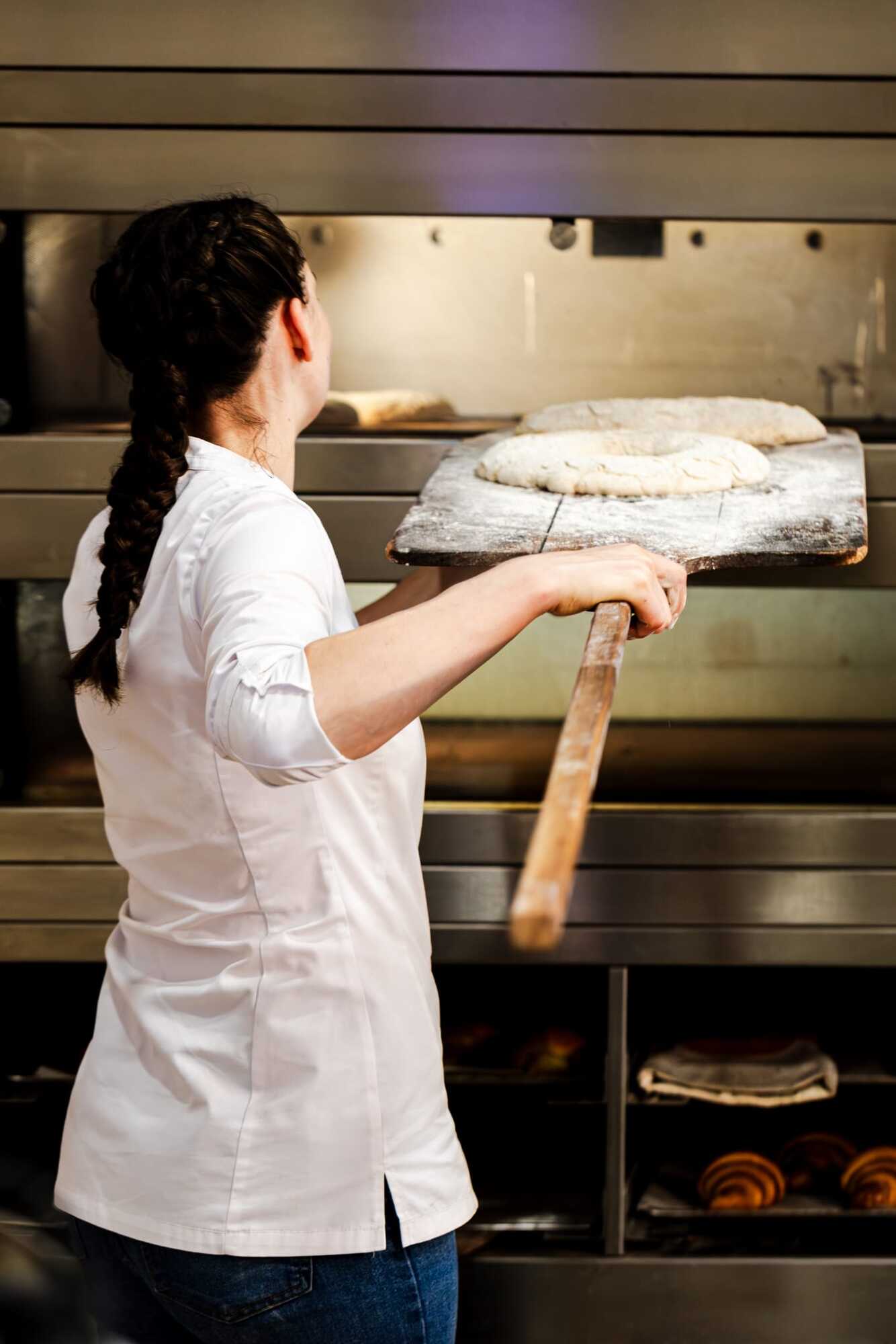
Since childhood, Sophie has been drawn to culinary professions. After first exploring pastry, it was ultimately bakery that revealed itself as the obvious path—thanks to her mentor, Alexis Blanck (L’Atelier du Pain Perdu, Schweighouse), who passed on his deep love for the craft.
That spark even lives on her skin: a croissant and a wheat ear, symbolic tattoos of a journey that helped her discover herself.
“At that moment, everything fell into place,” she says.
The gesture, the result, the emotion—she instantly knew she had found her calling.
Sophie is especially drawn to the sensory relationship with dough: the precision, the pursuit of perfection, the satisfaction of mastering a delicate product, but also the creativity offered by this living, demanding, sometimes unpredictable material.
Competitions: A Driving Force and a Genuine Joy
For Sophie, competitions aren’t about proving anything—they’re about surpassing herself.
“Competitions are stressful… but it’s a positive stress. It’s not an exam—it’s a creative, stimulating, almost playful adventure.”
She loves the complete immersion they demand.
At EGAST, Sophie will compete in the Thomas Marie Trophy with two sessions:
March 15: 3 p.m. – 7 p.m.
March 16: 4:30 a.m. – 12:30 p.m.
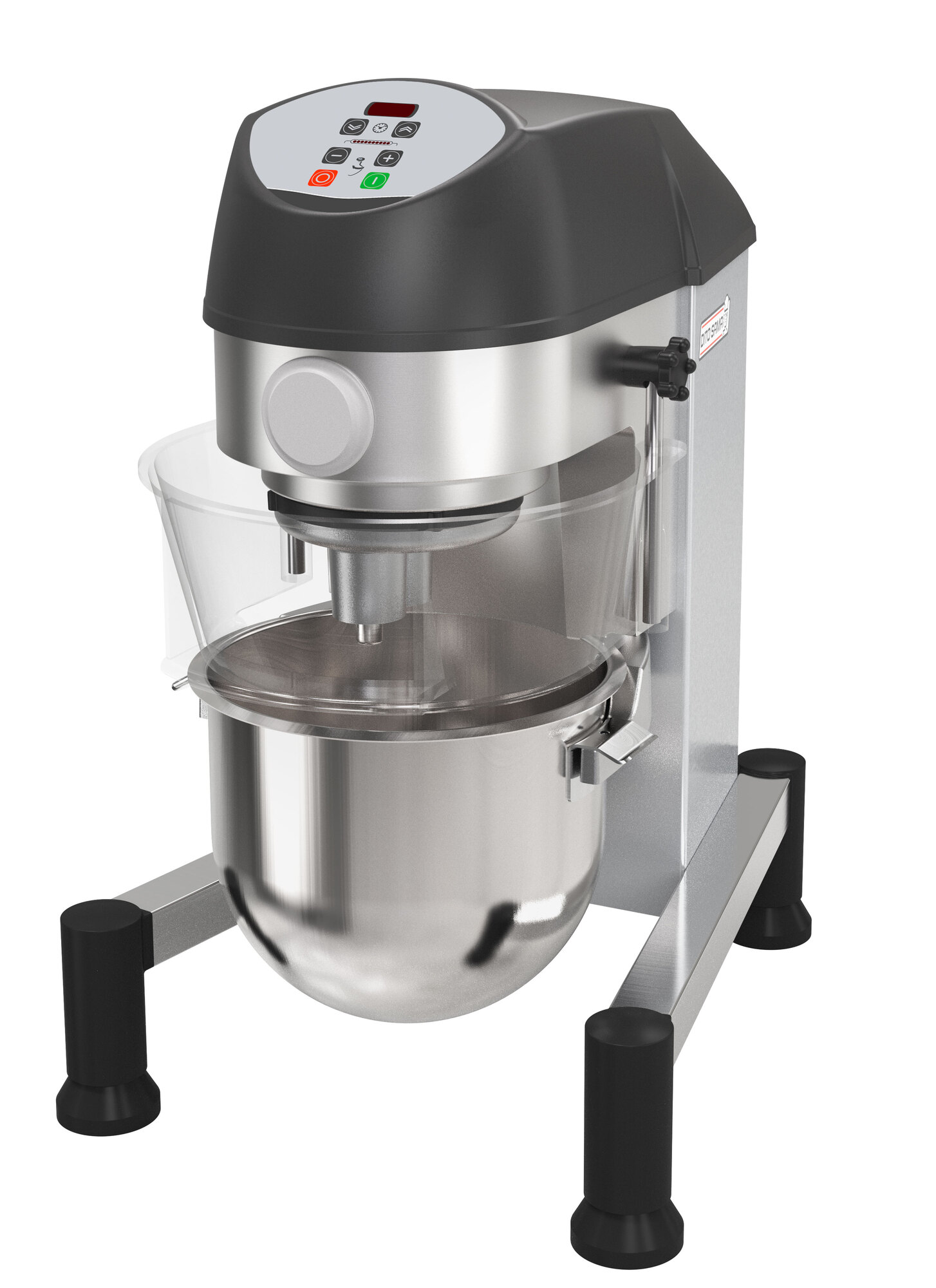
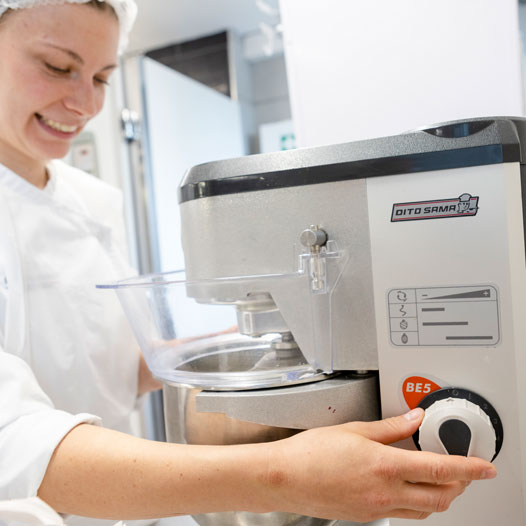
We’re proud to support her with a BE8 professional mixer, ensuring she can work in optimal conditions.
The Crucial Role of Equipment
To perform at her best, Sophie insists on training with the same equipment she’ll use in competition. At home, she works with a Dito Sama XBE10 mixer, an essential tool that she calls “a real lifesaver” during her Mastery Certificate preparation.
She discovered Dito Sama equipment at the Mondial du Pain, through the Ambassadeurs du Pain, and it was an instant match:
“It changes everything when you know you can rely on your equipment. The bowl shape, the hook… The dough doesn’t heat up, and you can work even with small quantities.”
Women in Bakery: A Growing Presence
For Sophie, women are gaining real visibility in the profession:
“We’re seeing more women on juries, in competitions, in expert roles. Things are changing—and it’s encouraging.”
Three women in particular have inspired her:
Marie Boucherot
Her employer at Boulangerie Place Monge, Beaune, committed to organic and local production, showing her that high standards and strong values can fully coexist in bakery.
Déborah Libs
Head Baker, World Champion in Viennoiserie, who impressed her with her simplicity, kindness, and invaluable advice.
Yasmine Menacer
A role model through her confidence, expertise, and presence.
“That’s where I want to go.”
Behind the Scenes: Hard Work, Sacrifice, and Perseverance
While Sophie may appear confident, she is quick to put things into perspective:
“People see what I show… but not the sacrifices, the energy, the hours of work behind it all.”
What has carried her this far?
A strong support system—her coach, her partner, her family.
“Without them, I wouldn’t be here.”

What’s Next? Dreams That Keep Growing
After seven years of competitions, Sophie is considering a short break—before diving back in stronger than ever.
Her ambitions are crystal clear: the French Cup, with an artistic showpiece, the Mondial du Pain, where she dreams of becoming the first French female candidate. And in the long term… the prestigious MOF Boulanger title.
“I’m not there yet. But when you aim for the stars, you reach the moon.”
On this International Women’s Rights Day, Dito Sama celebrates the journey, determination, and talent of Sophie Schultz.
Dito Sama at EGAST
Alongside our support for Sophie, Dito Sama will be present at EGAST with two partners:


We are also proud sponsors of three key competitions at the show:



16 mars
17 mars
18 mars
LAST NEWS


France Selection | Mondial du Pain 2027
Dito Sama, partner of the French Selection
- Dito Sama
- ...
- NEWS & EVENTS
- France Selection | Mondial du Pain 2027
Share
A PRESTIGIOUS COMPETITION AT THE HEART OF SMAHRT
SMAHRT 2026 has officially wrapped up in Toulouse, bringing together professionals from the hospitality, bakery, and foodservice industries.
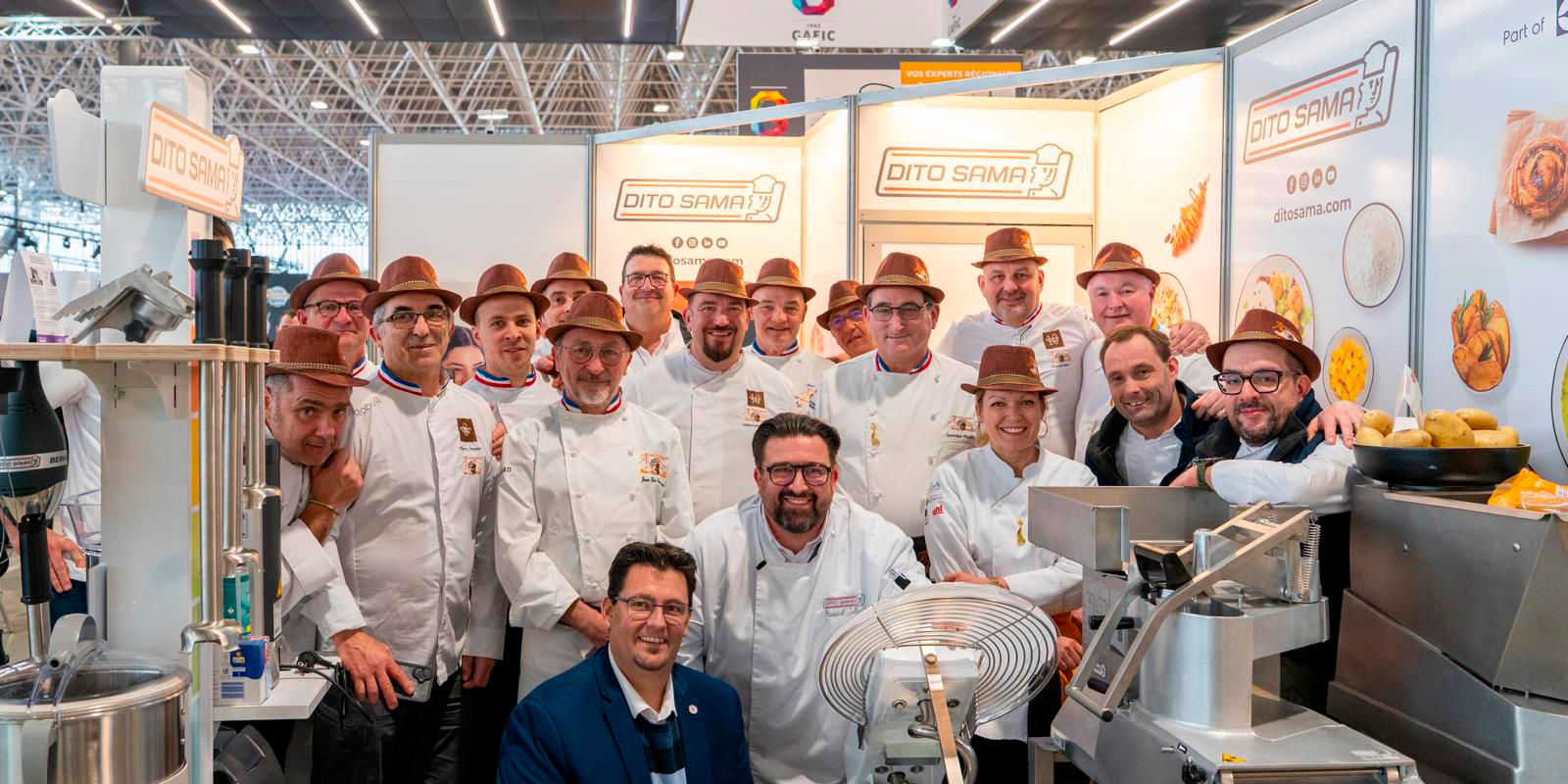
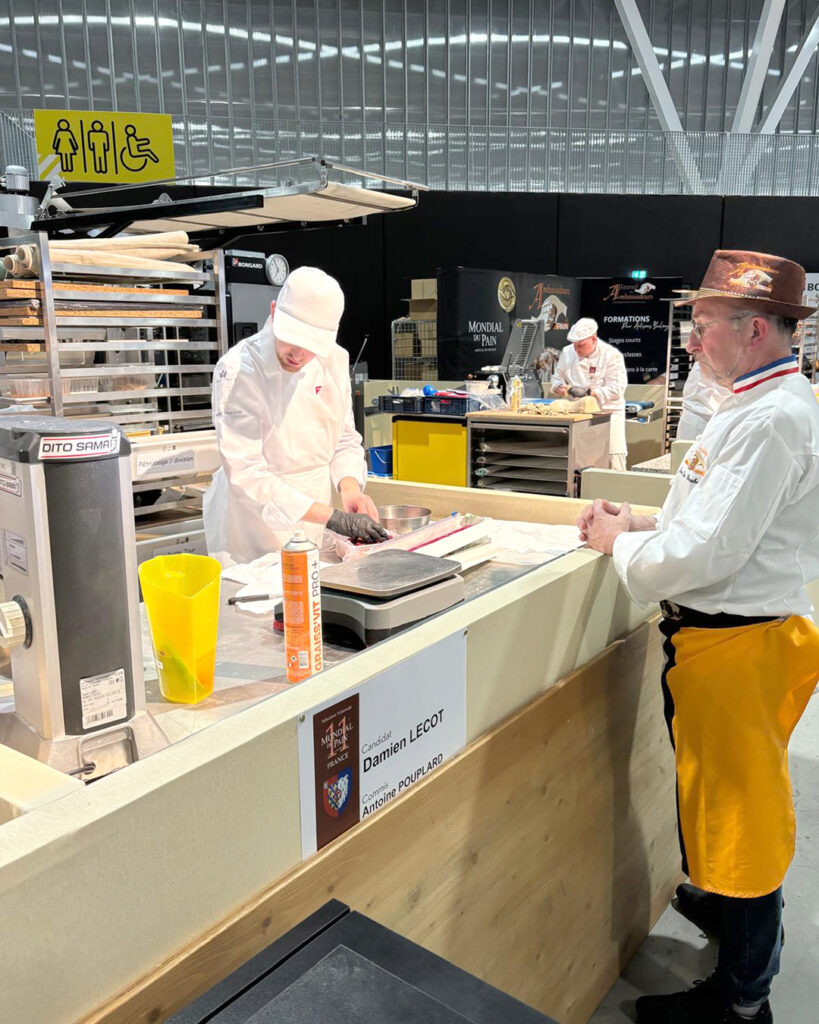
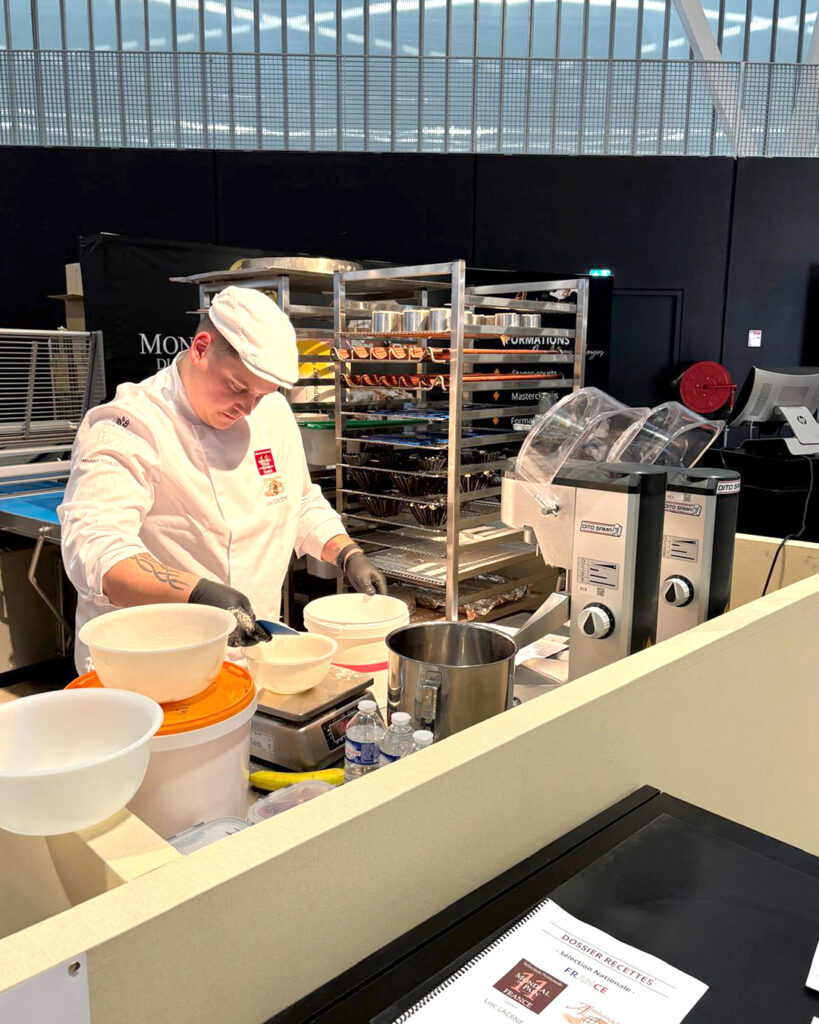
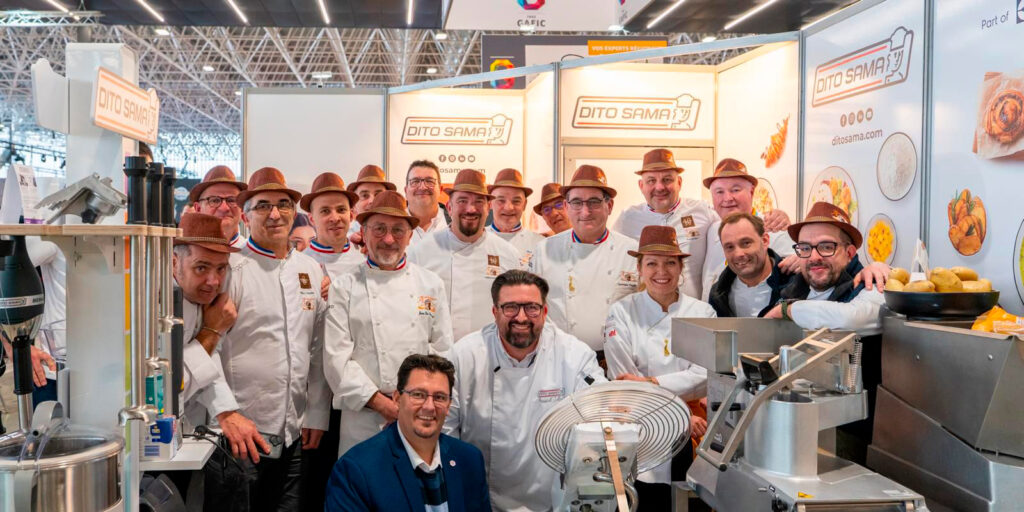
This year, Dito Sama proudly sponsored the French Selection for the Mondial du Pain, organized by Les Ambassadeurs du Pain.
Over three days, teams competed in demanding challenges requiring precision, creativity, endurance, and outstanding bakery expertise.
A SHOWCASE OF ARTISANAL EXCELLENCE
The French Selection for the Mondial du Pain highlighted the excellence of French bakery. Candidates were evaluated across:
Competition Categories
- Bread 🥖
- Viennoiserie 🥐
- Sandwich 🥪
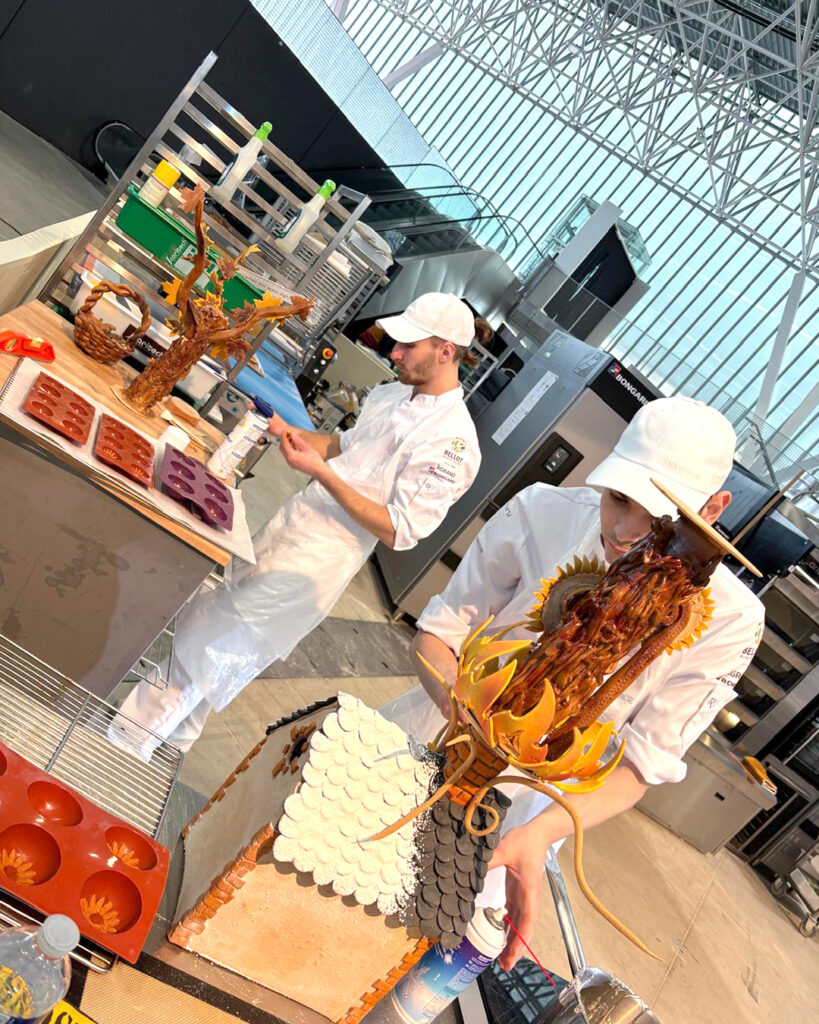
- Artistic Piece 🍞
Special Awards
- Taste & Nutrition Award 🏅
- Bio – Respectus Panis® Award 🏅
- Artistic Piece Award 🏅
- Snacking Award 🏅
🏆 CONGRATULATIONS TO THE GRAND WINNER
After nearly 10 hours of competition, the bakers who will represent France at the 2027 Mondial du Pain are:
Their exceptional performance reflects remarkable technical mastery, precision, creativity, and commitment demonstrated throughout the contest.
Dito Sama is proud that its equipment supported the competitors’ work during this demanding selection and looks forward to seeing France represented with excellence at the 2027 Mondial du Pain.

Moments from the Competition




The Equipment Chosen by the most talented professionals
As official Partner, Dito Sama provided two flagship solutions designed to deliver reliability, consistency, and ergonomic performance — even under intense competitive pressure.
Throughout the competition, the country’s most talented bakers showcased their skills using the same equipment available to professionals in bakeries today.
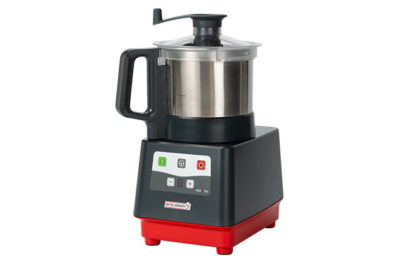
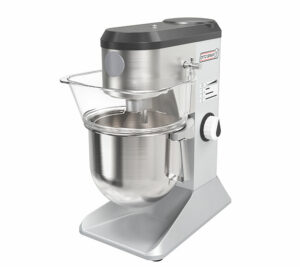
PREP4YOU
A powerful and versatile food processor offering precision, consistency, and efficiency.
Used for pralines, mixes, grinding, fillings, ganaches, emulsions, and more.
BE5
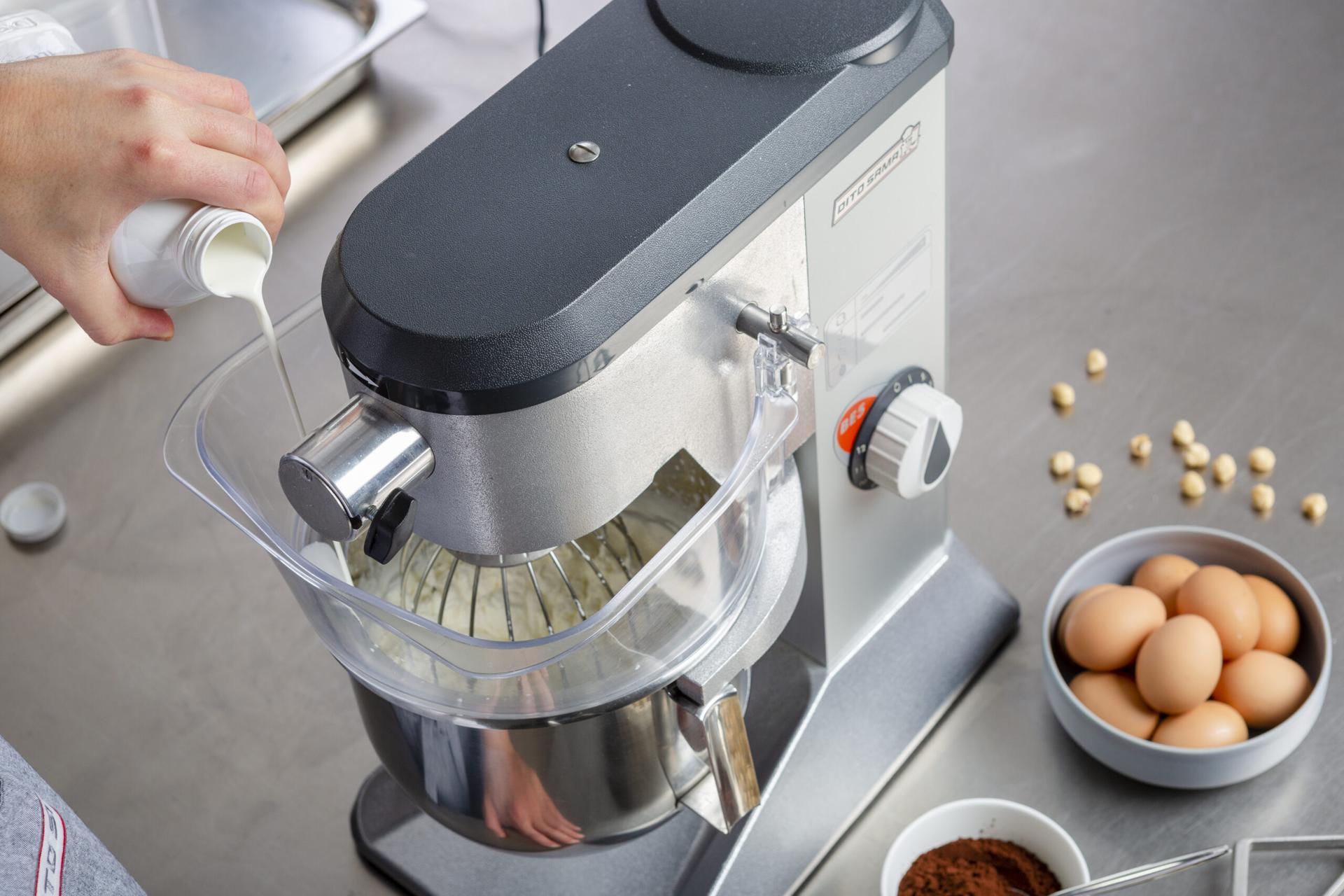
A trusted ally throughout the competition, ensuring consistent and reliable results for all bakery preparations.
A robust and versatile planetary mixer delivering outstanding performance for doughs, creams, mixes, and fillings.
If these pieces of equipment are chosen by the most demanding professionals, it is because they truly make a difference.
Today, these same solutions can elevate any bakery’s daily production. Choosing Dito Sama means choosing reliability, comfort, and a level of precision worthy of the world’s most prestigious competitions.
LAST NEWS

Dito Sama at SIGEP 2026
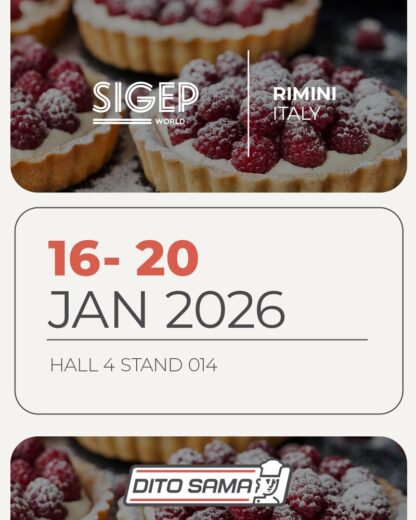
Come and visit us from January 16 to 20, 2026
- Dito Sama
- ...
- NEWS & EVENTS
- Dito Sama at SIGEP 2026
Share
Every new year marks a fresh start—and for Dito Sama, 2026 begins at SIGEP, the ultimate event for gelato, pastry, chocolate, coffee, bakery, and pizza professionals.
This is your chance to experience innovation firsthand. We’ll unveil our latest solutions, share expert insights, and showcase equipment designed to help you achieve efficiency, precision, and creativity in every preparation.
Join us and discover why Dito Sama continues to set the standard for professional kitchens worldwide.
MUST-SEE SOLUTIONS AT SIGEP
Discover the innovations that chefs and food professionals are talking about! From high-performance prep tools to flagship mixers trusted for over 60 years, our solutions are designed to elevate efficiency, precision, and creativity in every kitchen.
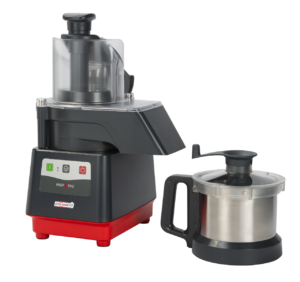
PREP
4YOU
Your all-in-one prep powerhouse. Cuts, chops, slices, and grates in record time for flawless results.
New: Precision slicing discs for perfect 2 mm or 4 mm cuts—even on delicate ingredients like dry meats and tomatoes.
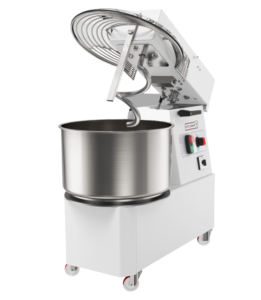
DOUGH
KNEADER
Engineered for bakers and pizzerias, this tilting-head kneader offers easy bowl access, quick cleaning, and unmatched versatility.
Consistent texture, reliable performance—adapted to all production volumes.
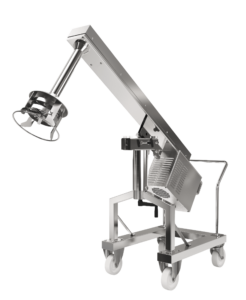
TBX
PRO
The ultimate solution for high-volume kitchens. Prepare up to 700 liters of soup quickly and effortlessly.
Power, precision, and flexibility for central kitchens, hospitals, and large-scale catering.
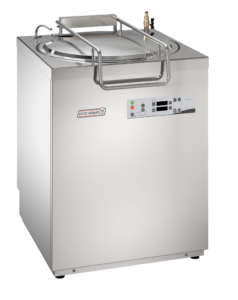
LVA
100
Advanced vegetable washing and spinning system for maximum hygiene and care.
High capacity, deep cleaning, and respect for product quality—ideal for restaurants and large kitchens
📍 SIGEP – Rimini, Italy | January 16–20, 2026
Visit us and elevate your culinary performance
WHY VISIT US AT SIGEP?

See. Understand. Choose.
- Live demonstrations every day with Chef Maurizio Marrocco
- Watch our equipment in action and experience real-time results
- Speak with our experts to find the perfect solution for your kitchen
CONTACT & MEET OUR TEAM

Olivier Montagne
Head of Sales, Marketing & Customer Service

Pierre Viroulaud
Export Manager

Luca Moro
Sales Manager Italy
Would you like to book a meeting with your regional sales manager? Our team will be on site throughout the event to support you, offer guidance, and provide tailored solutions : schedule a meeting now.
LAST NEWS

Mastering the Food Slicer: Best Practices for Consistent Cuts
- Dito Sama
- ...
- NEWS & EVENTS
- Mastering the Food Slicer: Best Practices for Consistent Cuts
Share
A commercial food slicer can transform how your kitchen handles prep – saving time, reducing waste, and elevating consistency. But only if it’s used correctly. From perfecting cut thickness to preventing accidents and maintaining blade sharpness, there’s a lot more to using a food slicer than flipping the switch.
Whether you’re new to commercial slicers or want to refine your team’s technique, this guide covers everything you need to know about using and maintaining your food slicer for reliable, high-quality results.
How to Use a Commercial Food Slicer for Precision Cutting

Commercial food slicers are designed to deliver precise, repeatable slices – ideal for everything from cured meats to firm vegetables. But to unlock their full potential, it’s important to treat the slicer as a precision instrument, not just another machine on the line.
Before you begin, always start with a stable, sanitized workspace. Assemble the slicer carefully, ensuring that the blade and guard are properly fitted. Many high-quality vegetable slicers and cutters, including Dito Sama models, are equipped with safety interlock systems that prevent the machine from operating unless all components are securely in place.
Next, adjust the thickness dial thoughtfully – consider the ingredient, the intended texture, and the visual appeal of the final dish. For example, paper-thin slices are perfect for carpaccio or garnishes, while thicker cuts may be preferred for roasting or layering in sandwiches.
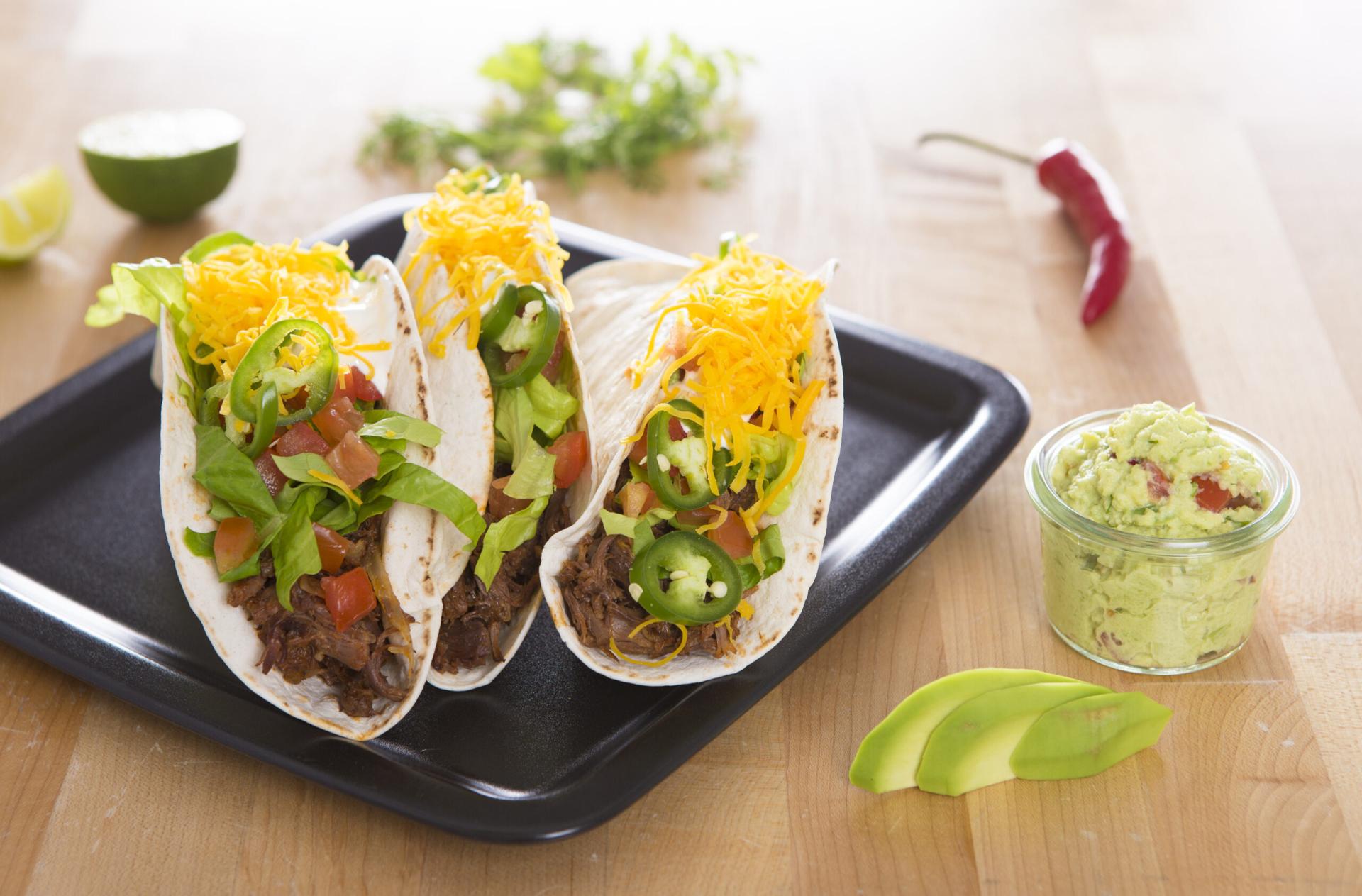
When feeding food through the slicer, always use the food pusher and apply steady, consistent pressure. Jerky or uneven motions can result in ragged cuts and increase the risk of injury. Let the blade do the work – high-quality slicers are designed to glide through product with minimal effort.
Working in organized batches can also streamline your prep. Group ingredients by slicing thickness or recipe use, so you’re not constantly resetting the machine or switching out discs. This saves time and minimizes handling, which improves hygiene and reduces the chance of cross-contamination.
Don’t forget to keep your workspace organized: have trays ready to collect sliced product, and clean as you go. A cluttered slicing station can slow you down and create unnecessary risks.
With proper technique, a food slicer can transform prep from a time-consuming chore into a clean, efficient process that enhances every dish on the menu.
Common Mistakes to Avoid When Operating a Food Slicer
Even experienced kitchen staff can develop habits that reduce the effectiveness of commercial slicers – or worse, put safety at risk. Here are a few pitfalls to avoid:
- Skipping setup checks: loose blades or misaligned parts can affect performance and safety.
- Applying uneven pressure: forcing the food through the slicer increases wear on the motor and creates irregular cuts.
- Using dull blades: a dull blade not only reduces slicing quality but also makes the machine work harder, shortening its lifespan.
- Neglecting cleaning: slicer blades and food trays should be cleaned thoroughly after each use to prevent contamination and buildup.
- Cutting unsuitable items: not all foods belong in a slicer. Avoid slicing very soft, crumbly, or frozen items unless the machine is rated for it.
Training your staff to recognize and avoid these issues will help extend your slicer’s lifespan and keep operations smooth.
Cleaning and Maintenance Tips for Long-Lasting Performance
A well-maintained slicer performs better, lasts longer, and keeps your kitchen compliant with health codes. Here’s how to keep it in peak condition:
01.
Disassemble and clean daily:
wipe down all surfaces, remove food particles from hard-to-reach areas, and sanitize according to your kitchen’s standards.
02.
Sharpen the blade regularly:
most slicers come with a built-in sharpening tool. Follow the manufacturer’s guidelines for frequency and technique.
03.
Inspect seals and moving parts:
look for signs of wear or damage and replace parts proactively to avoid downtime.
04.
Lubricate according to the manual:
if required, apply food-safe lubricant to moving parts as directed.
05.
Store safely:
when not in use, unplug and cover the slicer to protect it from dust and debris.

01.
Disassemble and clean daily:
wipe down all surfaces, remove food particles from hard-to-reach areas, and sanitize according to your kitchen’s standards.
02.
Sharpen the blade regularly:
most slicers come with a built-in sharpening tool. Follow the manufacturer’s guidelines for frequency and technique.
03.
Inspect seals and moving parts:
look for signs of wear or damage and replace parts proactively to avoid downtime.
04.
Lubricate according to the manual:
if required, apply food-safe lubricant to moving parts as directed.
05.
Store safely:
when not in use, unplug and cover the slicer to protect it from dust and debris.
Many Dito Sama models are designed for easy disassembly and hygiene, helping streamline cleaning without sacrificing durability or performance.
With the right habits and tools, a commercial food slicer becomes more than just a prep tool – it becomes an essential part of a faster, safer, and more consistent kitchen operation.
LAST NEWS
Best Techniques for Efficient and Precise Vegetable Preparation
- Dito Sama
- ...
- NEWS & EVENTS
- Best Techniques for Efficient and Precise Vegetable Preparation
Share

Vegetable prep is one of the most time-consuming tasks in any commercial kitchen – and one of the most important. Whether it’s for a delicate garnish or a high-volume batch of sliced potatoes, the way vegetables are prepared affects texture, taste, and timing. In busy professional kitchens, mastering this part of the workflow can make the difference between a smooth service and a rushed one.
Let’s explore why precision matters, what tools make the biggest difference, and how to structure your prep process for maximum efficiency.
The Importance of Precision in Commercial Vegetable Preparation
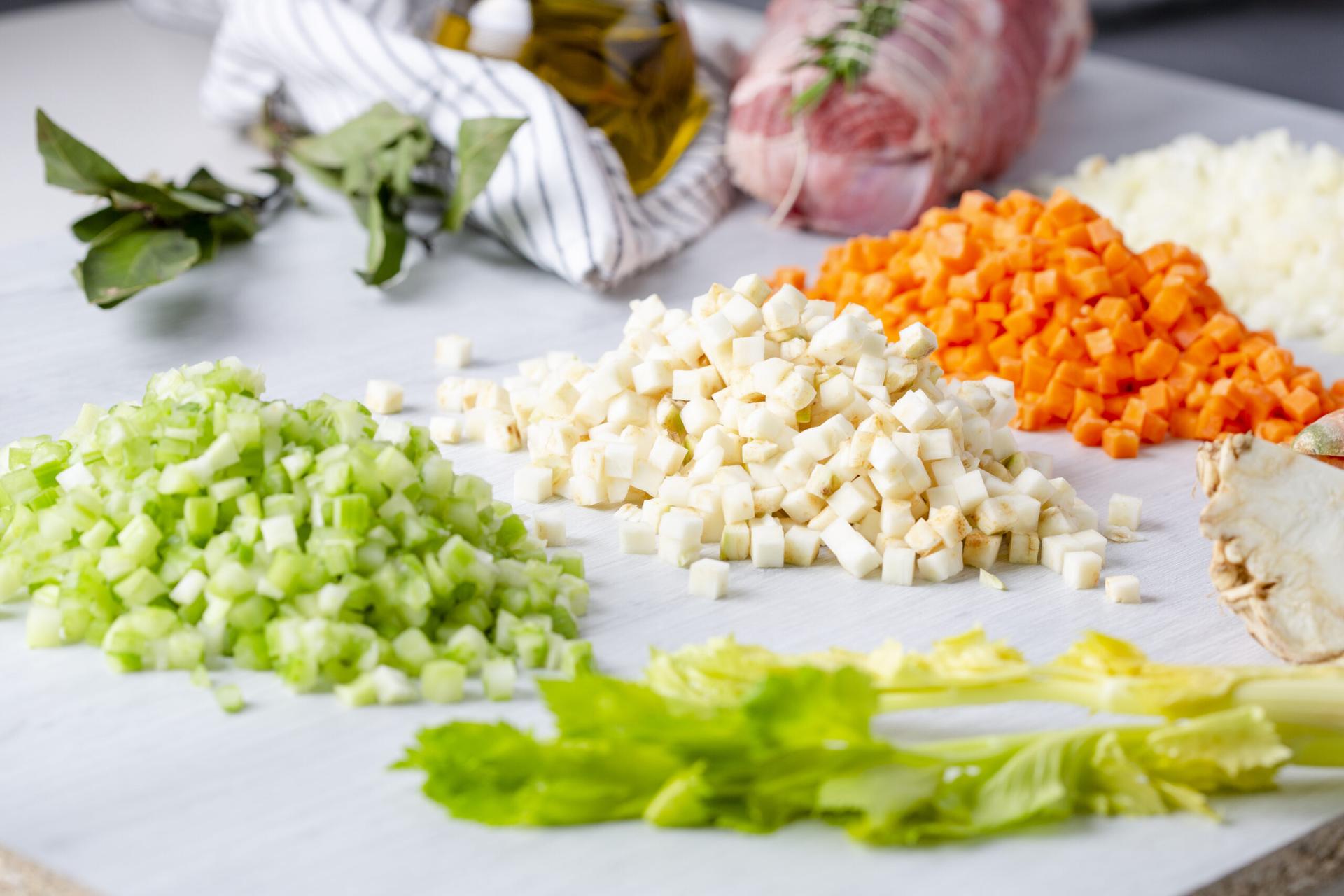
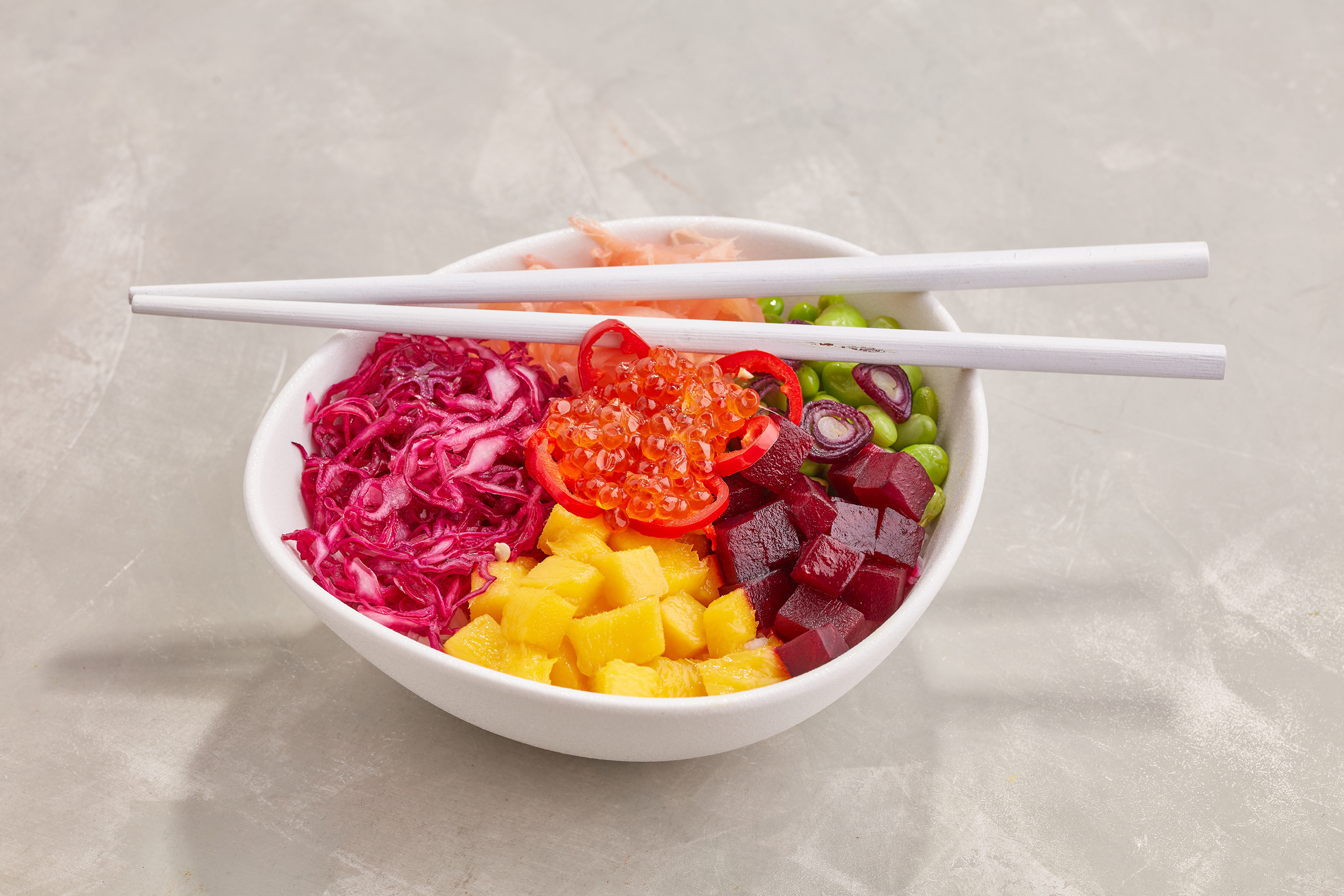
Vegetable preparation isn’t just about cutting things up quickly – it’s about consistency. Even, well-sized cuts ensure that vegetables cook at the same rate, absorb flavors uniformly, and contribute to the visual appeal of the dish. This kind of precision supports both food quality and kitchen efficiency.
In commercial settings, inconsistent prep can lead to longer cook times, uneven textures, and avoidable waste. More importantly, it disrupts the rhythm of a professional kitchen where timing is everything. Precise vegetable prep improves plating, simplifies portioning, and helps maintain food costs.
Essential Tools for Fast and Uniform Vegetable Cutting
While skilled knife work is always valuable, commercial kitchens depend on more than blades alone. The right equipment helps scale precision and speed across multiple shifts. Here are some essential tools:
- Commercial vegetable slicers: designed for volume and uniformity, these machines can process large quantities of vegetables with adjustable slicing settings to suit different needs.
- Food processors with slicing attachments: versatile and efficient, they allow for quick changeovers between tasks like chopping, grating, and shredding.
- Mandolines and handheld cutters: useful for small batches or precise cuts, especially in prep stations where space is limited.
When choosing these tools, look for models that are easy to clean, offer safety features, and come with multiple blade or disc options. Dito Sama’s professional vegetable slicers, for instance, are engineered for performance, ease of use, and hygiene – making them ideal for both fast-paced and precision-driven kitchens.
Best Practices for Maximizing Efficiency in High-Volume Kitchens
To truly speed up vegetable prep without sacrificing quality, it's not just about tools – it’s about process. A well-structured prep station paired with thoughtful time management can create an environment where speed and precision go hand in hand. Here are a few tried-and-true strategies:
Batch processing:
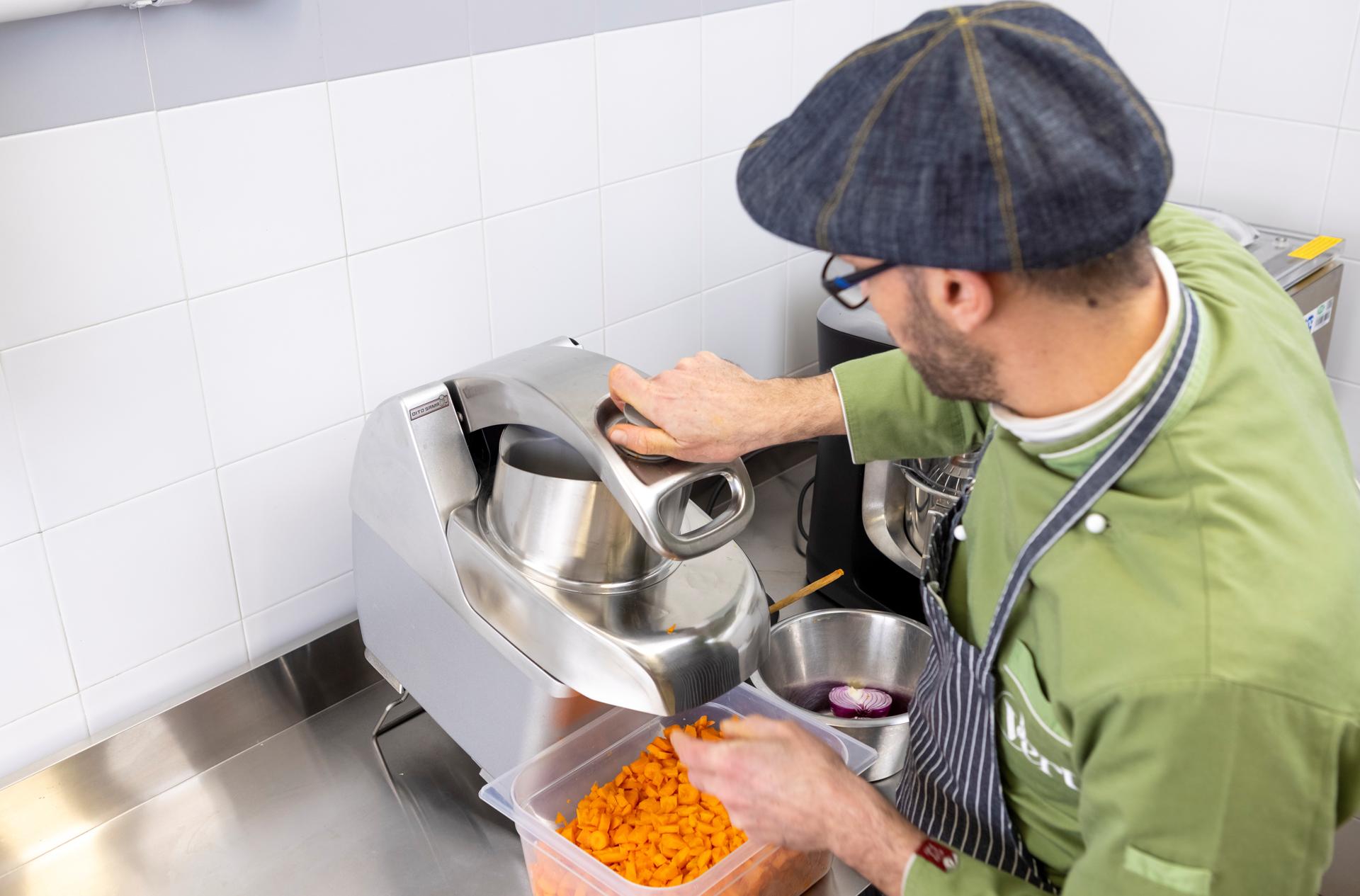
instead of prepping vegetables one dish at a time, group ingredients by type and prepare them in large volumes. This reduces repetitive transitions between tasks, saves time on equipment cleaning, and ensures a steady supply during peak hours.
Standardize cuts and quantities:
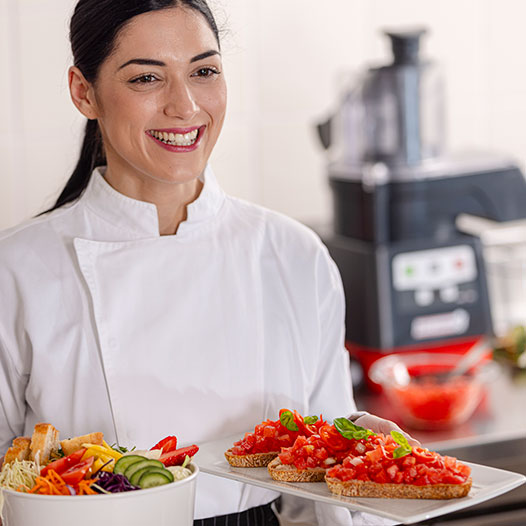
train staff to recognize and execute standardized cut types – like julienne, brunoise, or batonnet – and align them with portion sizes. This not only boosts consistency but also simplifies cooking times and improves portion control.
Prep during low-volume hours:
use early morning or post-service windows to handle prep work. Assign prep duties strategically based on skill level and station volume to make the most of your team’s time.
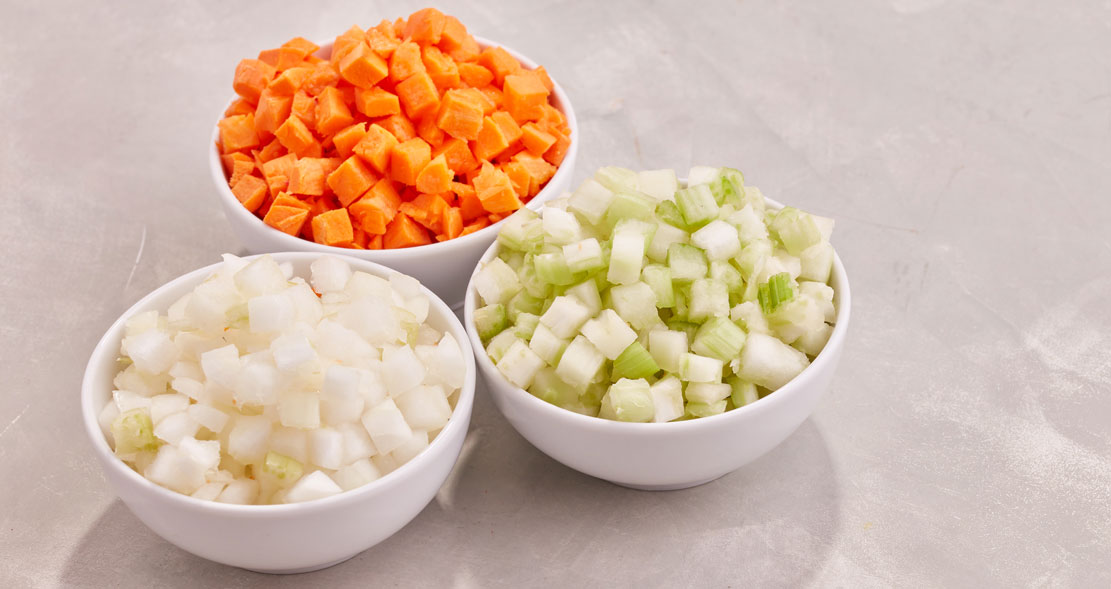
Organize and label prepped items:
store vegetables in labeled, transparent containers with clear dates and usage notes. This helps minimize confusion during service, prevents over-prepping, and ensures rotation based on freshness.

Design ergonomic prep zones:
position slicers, containers, cutting surfaces, and disposal bins within arm’s reach to limit unnecessary movement. A well-organized station reduces fatigue and keeps productivity high.
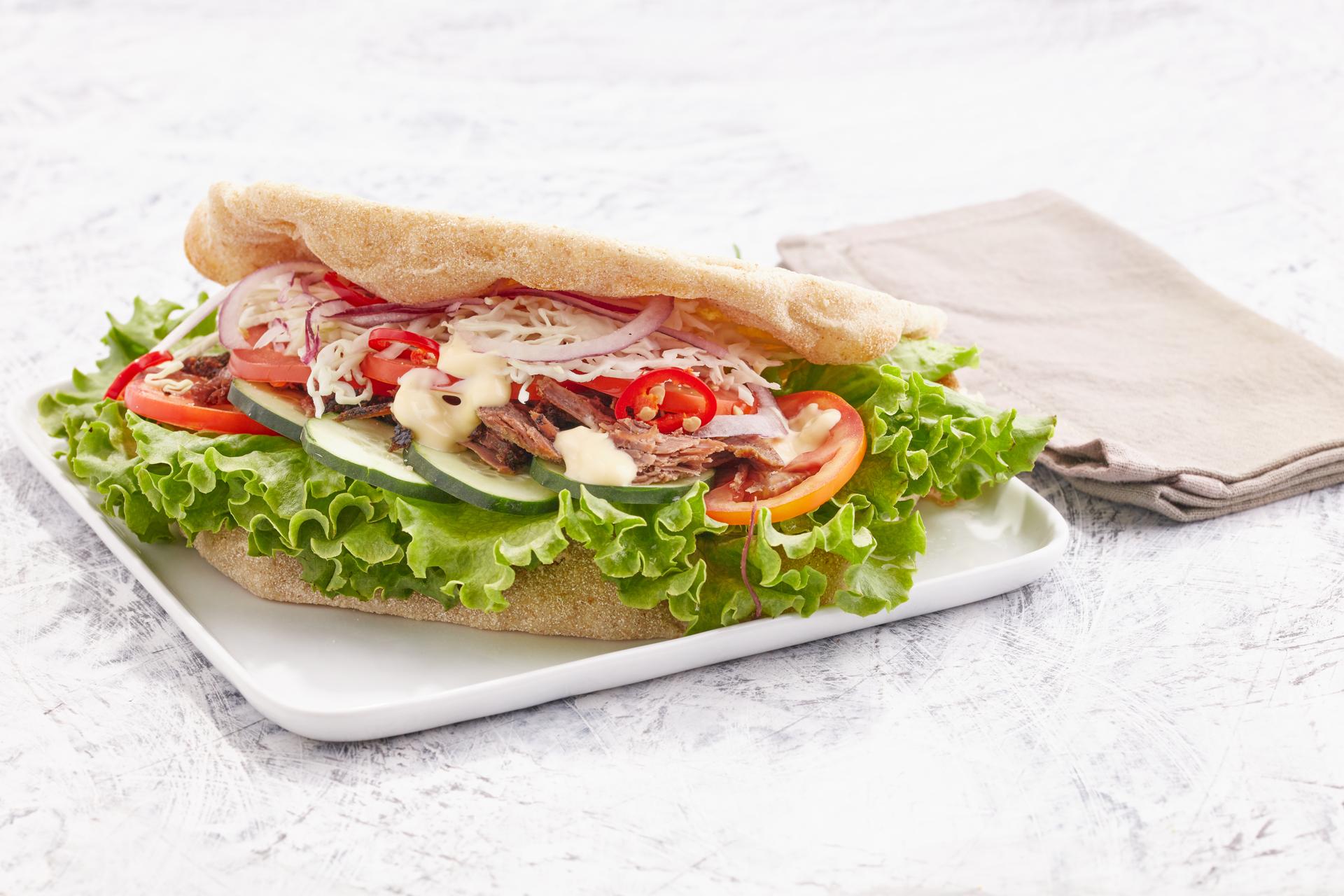
Incorporate cross-utilization:
when possible, prep vegetables that can serve multiple purposes across the menu. For example, sliced onions can be used in sandwiches, sautéed dishes, and garnishes – helping reduce waste and improve efficiency.
Some kitchens also benefit from integrating vegetable prep into digital systems – using kitchen display systems or software to track quantities, prep times, and waste metrics. This adds a data-driven dimension to kitchen operations, allowing teams to make smarter adjustments over time.
Ultimately, efficient vegetable prep is about more than speed. It’s about designing a system that allows your team to work smarter, stay consistent, and deliver high-quality dishes with confidence and precision.
LAST NEWS

How to Select a Reliable Restaurant Equipment Supplier
- Dito Sama
- ...
- NEWS & EVENTS
- How to Select a Reliable Restaurant Equipment Supplier
Share
The process of selecting a restaurant equipment supplier goes far beyond checking what’s in stock. It’s about building a partnership with someone who understands the daily realities of your kitchen – whether it’s the rush of lunch service or the pressure to deliver consistent results with limited space and time. The right supplier becomes part of your operation’s rhythm, offering more than just products: they bring knowledge, stability, and problem-solving when it matters most.
In this article, we’ll explore what to look for in a kitchen equipment supplier, how to evaluate product quality and pricing, and the key questions to ask before entering a long-term partnership.
Key Factors to Consider When Selecting a Restaurant Equipment Supplier
Not all suppliers are created equal. A good one will act as a partner to your business – not just a distributor. Here are the most important elements to consider:
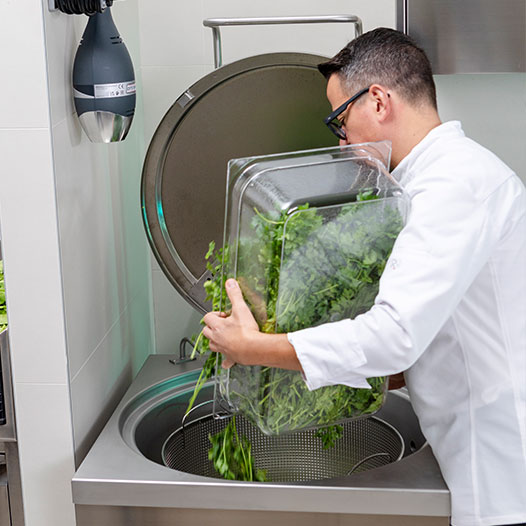
Specialization in commercial kitchen equipment:
look for suppliers who focus exclusively or primarily on restaurant-grade appliances. They’re more likely to understand the demands of a high-volume kitchen.
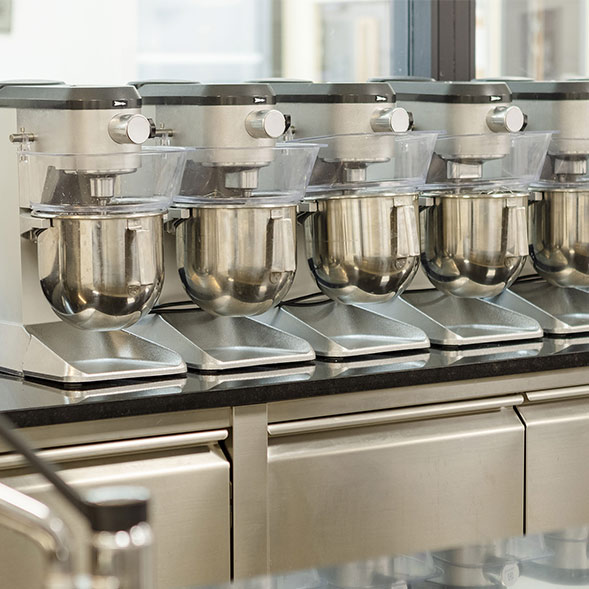
Product range and availability:
a wide selection of products, from food processors and slicers to mixers and refrigeration units, means fewer compromises when outfitting your kitchen.
Support and training:
does the supplier provide installation, maintenance training, and technical support? This is crucial for ensuring your team can use the equipment efficiently and safely.
Reputation and reliability:
check reviews, ask for references, and speak to other industry professionals. A supplier with a proven track record can save you time and hassle.
Logistics and delivery times:
fast, reliable delivery ensures your project stays on schedule and minimizes operational downtime.
Suppliers like Dito Sama are known not only for their high-quality commercial kitchen equipment but also for their ongoing support and commitment to innovation.
How to Evaluate Quality and Pricing in Commercial Kitchen Equipment
Finding the right balance between quality and cost is one of the biggest challenges in commercial kitchen procurement. Low-cost equipment might seem attractive initially, but over time, the true cost of ownership becomes clear.
Here’s how to make a well-informed evaluation:
- Examine the build quality: Stainless steel construction, reinforced internal parts, and ergonomic design are all signs of equipment built for long-term use.
- Compare warranties and service agreements: Strong warranty terms often reflect the manufacturer’s confidence in their product.
- Assess energy efficiency: More efficient appliances reduce utility costs and contribute to sustainability goals.
- Ask about parts and repairs: Check how easy it is to source replacement parts and whether service technicians are readily available in your area.
Dito Sama is a supplier that checks all these boxes. Known for its precise engineering and robust construction, Dito Sama equipment is designed specifically for demanding commercial environments. Their products not only offer exceptional performance and durability, but they are also backed by responsive customer service and support that goes beyond the initial sale.
Ultimately, the best restaurant equipment supplier is one that helps you think beyond price tags – offering insights into durability, performance, and long-term value.
Top Questions to Ask Before Partnering with a Supplier
In addition to evaluating features and pricing, it’s important to assess how well the supplier aligns with your day-to-day operations. A reliable supplier doesn’t just sell you products – they contribute to your kitchen’s efficiency, compliance, and long-term success.
Some suppliers may offer additional services that can bring significant value, including:
- Consultation on layout and equipment planning to help optimize workflow and space utilization.
- Regular service checks and preventative maintenance programs that reduce unexpected breakdowns.
- Access to innovation previews – being among the first to test or adopt the newest appliances and technologies.
- Customized equipment bundles tailored to specific foodservice formats, like bakeries, QSRs, or catering businesses.
These added services can have a substantial impact, especially when scaling your operation or refining your workflow.
Before signing on with a new commercial restaurant equipment supply partner, get the full picture by asking the right questions:
1. What is your experience in the foodservice industry?
2. Do you offer equipment training and support for my team?
3. How do you handle warranty claims and service calls?
4. Can you provide references from businesses similar to mine?
5. What lead times should I expect for standard and custom orders?
6. Do you offer guidance on space planning or kitchen design?
7. What post-sale support is available – both short and long term?
These questions will help you assess whether the supplier can provide not just products, but also the expertise and partnership your business needs to thrive.
A reliable kitchen equipment supplier is more than a vendor – they’re part of your operation’s foundation. With the right support, you’ll gain more than appliances. You’ll gain peace of mind, better performance, and a partner who’s invested in your long-term success.
LAST NEWS
Common Mistakes to Avoid When Choosing Kitchen Appliances
- Dito Sama
- ...
- NEWS & EVENTS
- Common Mistakes to Avoid When Choosing Kitchen Appliances
Share
Equipping a kitchen – especially a professional one – is a significant investment. And while it might be tempting to go with the most popular models or the lowest prices, those shortcuts often come at a cost. From mismatched equipment to underpowered machines that can’t handle the volume, there are plenty of pitfalls that can derail a kitchen setup before it even gets started.
In this article, we’ll explore the most common mistakes professionals make when choosing kitchen appliances, how to evaluate the best kitchen appliance brands for your unique needs, and smart tips to guide long-term investments.
Common Pitfalls to Avoid When Investing in Kitchen Equipment
When selecting new equipment, many buyers focus only on features and price. But choosing kitchen appliances for a commercial environment involves balancing performance, durability, energy consumption, and ease of maintenance. Here are some common missteps to avoid:
01.
Prioritizing price over performance:
while budget matters, cheaper appliances often lack the power and resilience needed for high-volume use. This can lead to frequent breakdowns and higher long-term costs.
02.
Ignoring workflow compatibility:
even the best appliance is inefficient if it doesn't fit your kitchen’s flow. Oversized units or poor placement can create bottlenecks and safety risks.
03.
Overlooking cleaning and maintenance:
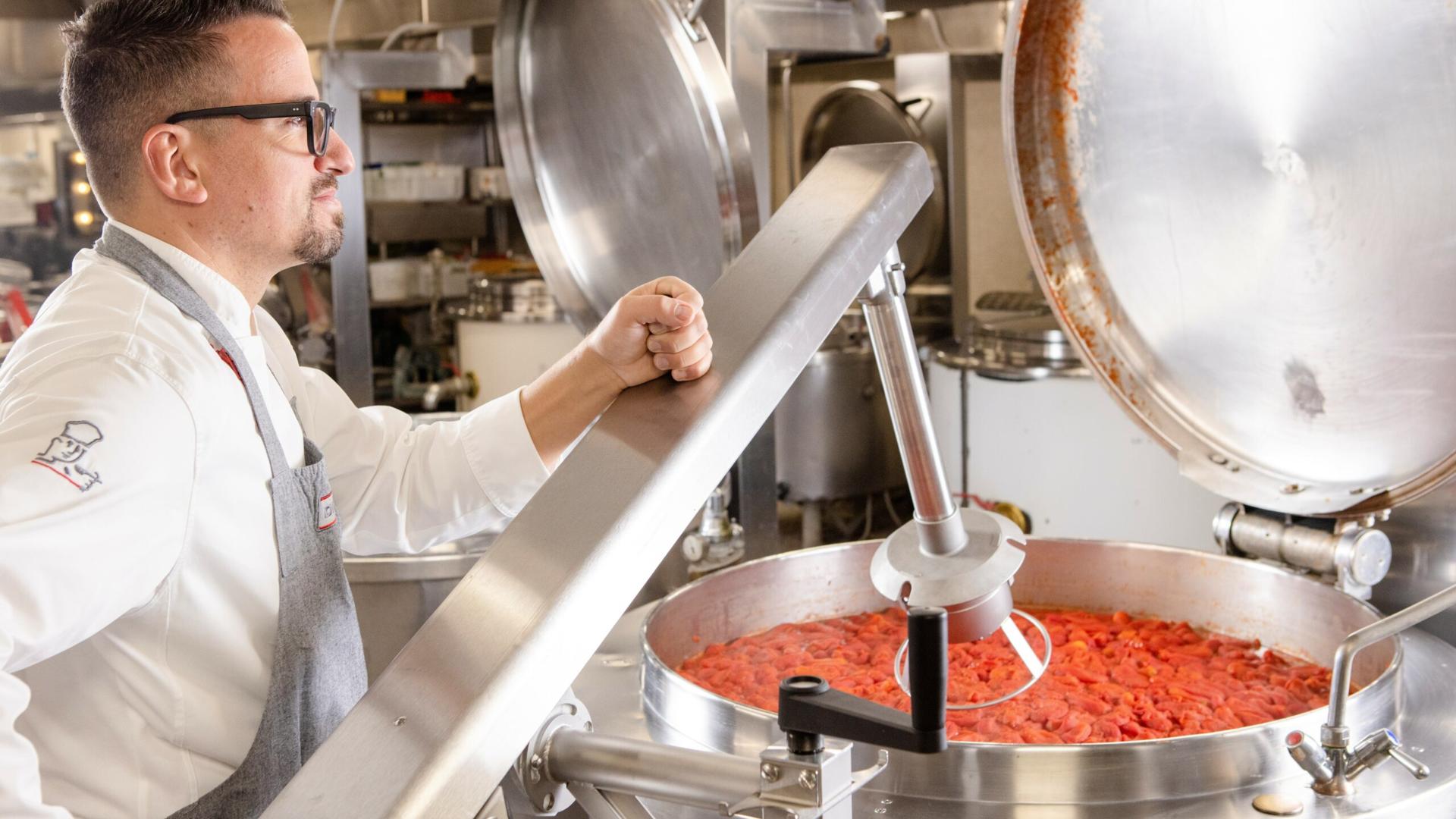
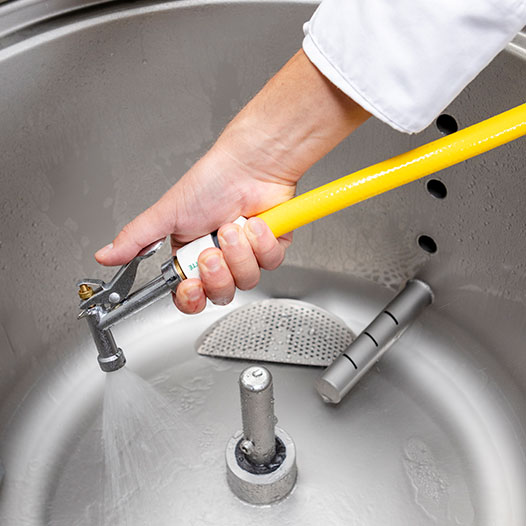
complex designs or hard-to-clean components slow down turnover and increase sanitation risks. Always check how easy the appliance is to maintain. Is it fully detachable? Is it dishwasher-safe? For how long will the spare parts be available?
04.
Buying consumer-grade equipment for commercial use:
home appliances are not built for professional settings. They wear out quickly and typically don’t meet health and safety standards.
05.
Skipping staff input:
the people using the equipment daily have valuable insight. Involving your team in the decision-making process ensures you choose tools that truly fit your operation.

01.
Prioritizing price over performance:
while budget matters, cheaper appliances often lack the power and resilience needed for high-volume use. This can lead to frequent breakdowns and higher long-term costs.
02.
Ignoring workflow compatibility:
even the best appliance is inefficient if it doesn't fit your kitchen’s flow. Oversized units or poor placement can create bottlenecks and safety risks.
03.
Overlooking cleaning and maintenance:
complex designs or hard-to-clean components slow down turnover and increase sanitation risks. Always check how easy the appliance is to maintain. Is it fully detachable? Is it dishwasher-safe? For how long will the spare parts be available?
04.
Buying consumer-grade equipment for commercial use:
home appliances are not built for professional settings. They wear out quickly and typically don’t meet health and safety standards.
05.
Skipping staff input:
the people using the equipment daily have valuable insight. Involving your team in the decision-making process ensures you choose tools that truly fit your operation.
How to Evaluate the Best Kitchen Appliance Brands for Your Needs
Choosing the right kitchen appliance brand isn’t just about name recognition – it’s about how well the tools you bring into your kitchen will support your specific needs. It’s easy to be swayed by popularity or sleek design, but what really counts is how a machine performs when it’s running all day, every day.
Start by thinking about how the brand performs under pressure. Has it been tested in fast-paced, professional environments? Can it deliver consistent results during peak hours? Brands that specialize in commercial kitchen appliances – like Dito Sama – are often better equipped to handle the demands of high-output, high-expectation kitchens.
Next, look at what the brand is known for. Does it focus on performance and longevity? Are its products engineered for repetitive, intensive tasks? These are often signs of thoughtful design meant for professionals – not just home cooks.
It’s also worth digging into the practicalities:
- What kind of warranty is offered?
- What kind of warranty is offered?
- What kind of warranty is offered?
Finally, talk to others in the industry or read reviews from people who run kitchens similar to yours. Their experience often reveals more than a spec sheet can.
Choosing a brand that truly understands what it takes to keep a commercial kitchen running smoothly will save you time, money, and stress in the long run.
Tips for Making Smart, Long-Term Equipment Investments
Buying the best kitchen appliances isn’t just about the upfront purchase – it’s about what those tools do for your business over time. Here’s how to make smart, future-proof choices:
Think in systems, not in silos:
appliances should work together. Choose tools that integrate well into your overall workflow, reducing steps and manual labor.
Plan for growth:
select equipment that can scale with your business. Adjustable capacities, modular designs, or upgradeable components add long-term value.
Balance innovation with practicality:
cutting-edge tech is exciting, but only if it solves real problems in your kitchen. Prioritize reliability and usability over flashy features.
Invest in training:
even the best appliances are only as good as the people using them. Make sure your team is trained to operate and maintain new equipment properly.
With a thoughtful approach and a focus on professional-grade performance, you’ll avoid costly mistakes and build a kitchen setup that’s equipped to deliver – day after day.
LAST NEWS
Essential Appliances for Setting Up a Fully Equipped Commercial Kitchen
- Dito Sama
- ...
- NEWS & EVENTS
- Essential Appliances for Setting Up a Fully Equipped Commercial Kitchen
Share
Designing a commercial kitchen from the ground up is a complex task – but it’s also one of the most exciting phases of launching or expanding a food business. The right equipment doesn’t just fill a space; it shapes how efficiently your team can work, how safe the environment is, and how consistent your output will be. Before the burners are lit or the mixers start spinning, it’s critical to align your setup with the core requirements of a commercial kitchen.
In this guide, we’ll walk through the must-have commercial kitchen appliances, key safety and hygiene requirements, and best practices for organizing your space to boost workflow.
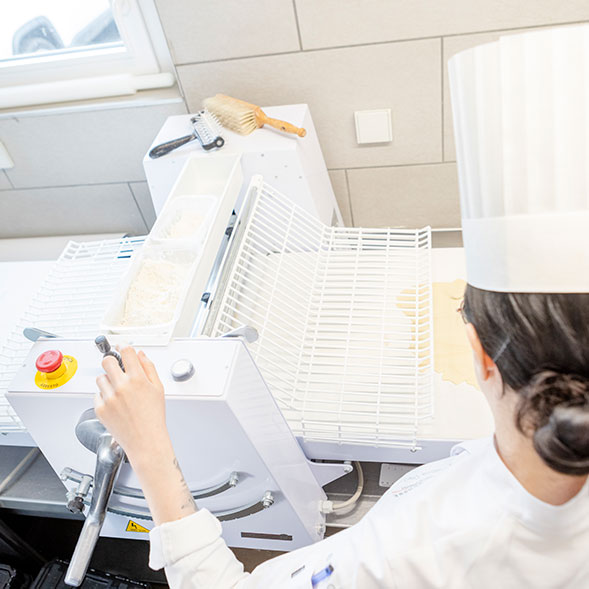
Essential Equipment Every Commercial Kitchen Must Have
Every kitchen tells its own story, shaped by the type of cuisine, the size of the team, and the rhythm of daily service. But behind every great kitchen is a well-thought-out lineup of essential tools. Before diving into specialty appliances or layout tweaks, it’s important to focus on the categories of equipment that form the operational backbone of any professional kitchen. From prep to storage, these appliances drive productivity and consistency from the ground up:
01.
Food preparation equipment:
this includes professional food processors, slicers, hand mixers, and vegetable cutters. These appliances drastically reduce manual labor and ensure consistent prep.
02.
Cooking equipment:
ovens (convection or combi), fryers, grills, steamers, and induction cooktops form the heart of most kitchens. Choose models that balance output, energy efficiency, and durability.
03.
Cold storage units:
from reach-in refrigerators to undercounter freezers, reliable temperature control is critical for food safety.
04.
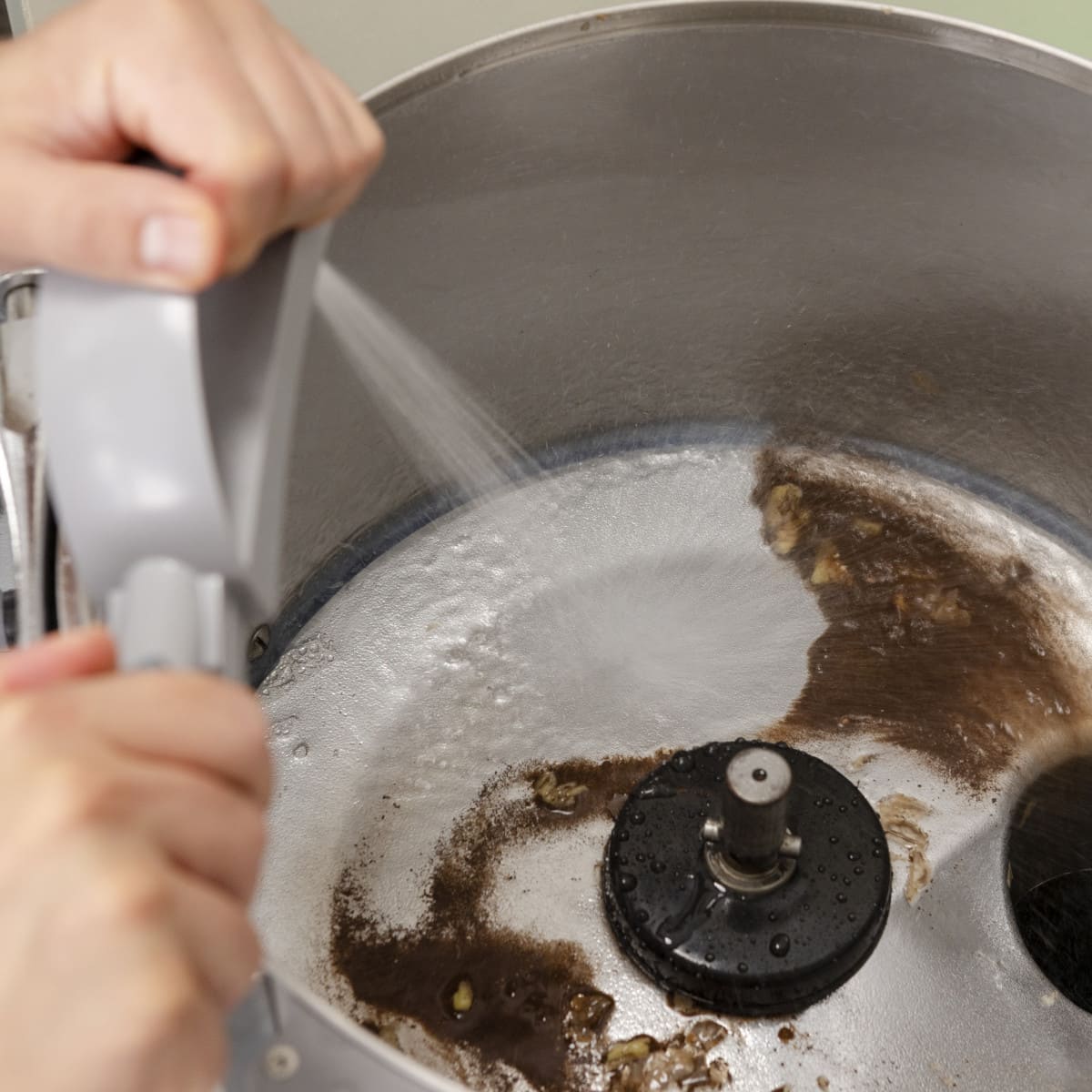
Sanitation systems:
high-capacity dishwashers, handwashing stations, and waste management setups help maintain cleanliness and comply with regulations.
05.
Storage solutions:
shelving, bins, and secure dry storage areas keep supplies organized and accessible, reducing clutter and improving kitchen flow.


01.
Food preparation equipment:
this includes professional food processors, slicers, hand mixers, and vegetable cutters. These appliances drastically reduce manual labor and ensure consistent prep.
02.
Cooking equipment:
ovens (convection or combi), fryers, grills, steamers, and induction cooktops form the heart of most kitchens. Choose models that balance output, energy efficiency, and durability.
03.
Cold storage units:
from reach-in refrigerators to undercounter freezers, reliable temperature control is critical for food safety.
04.
Sanitation systems:
high-capacity dishwashers, handwashing stations, and waste management setups help maintain cleanliness and comply with regulations.
05.
Storage solutions:
shelving, bins, and secure dry storage areas keep supplies organized and accessible, reducing clutter and improving kitchen flow.
When selecting commercial kitchen equipment, focus on multi-functionality, durability, and ease of cleaning. Brands like Dito Sama design their tools to meet these exact needs, supporting chefs with durable appliances built for volume, speed, and precision.
Safety and Hygiene Standards for Commercial Kitchens
Equipping your kitchen also means meeting strict safety and hygiene regulations. Commercial kitchen requirements vary by location, but generally include the following:
- Proper ventilation systems to control smoke, odors, and heat.
- Handwashing stations located in easily accessible areas.
- Non-slip flooring and clear walkways to prevent accidents.
- Food-safe surfaces for prep and storage, such as stainless steel worktops.
- Temperature monitoring systems to ensure that cold and hot foods are stored and served safely.
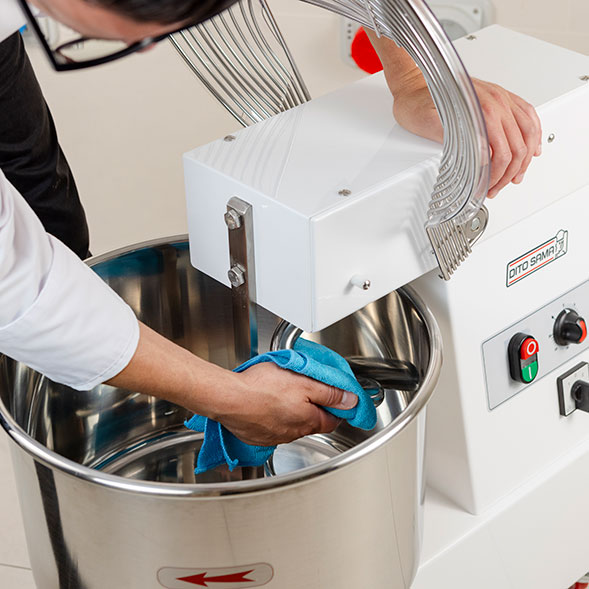
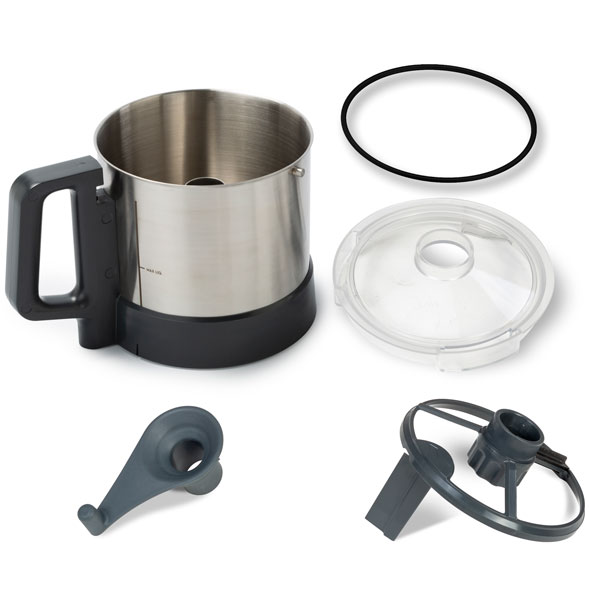
In addition to facility design, your equipment plays a crucial role in meeting hygiene standards. Appliances with removable parts, seamless construction, and dishwasher-safe components simplify sanitation and reduce risk.
Many commercial kitchen appliances from Dito Sama are built with these hygiene-first features in mind – designed to meet international food safety standards while remaining practical and durable.
How to Optimize Space and Workflow in a Commercial Kitchen
Even with the right appliances, a poorly organized kitchen can slow down service and create bottlenecks. Optimizing layout and workflow is essential to getting the most from your space.
Start with a layout that reflects your operation’s needs. The classic kitchen work triangle – connecting prep, cooking, and cleaning stations – remains a useful principle. In larger kitchens, zoning by task (e.g., hot line, cold prep, pastry) can reduce traffic and cross-contamination.
Other workflow tips include:
- Group related appliances together (e.g., cutters and slicers near prep counters, blenders near cold storage).
- Allow for clear, uninterrupted paths between stations.
- Choose compact or multifunctional equipment to free up floor space.
- Use vertical space for shelving and hanging racks to maximize storage.
High-performance commercial kitchen equipment – especially compact or modular designs – can dramatically improve your use of space. Dito Sama’s range of prep tools, for instance, is built with real kitchens in mind, offering power and precision without sacrificing flexibility.
Ultimately, designing a compliant and efficient kitchen isn’t about buying the most equipment – it’s about selecting the right appliances that work in harmony with your team and your space.
LAST NEWS
Choosing the Right Vegetable Slicer for Precision and Speed
- Dito Sama
- ...
- NEWS & EVENTS
- Choosing the Right Vegetable Slicer for Precision and Speed
Share
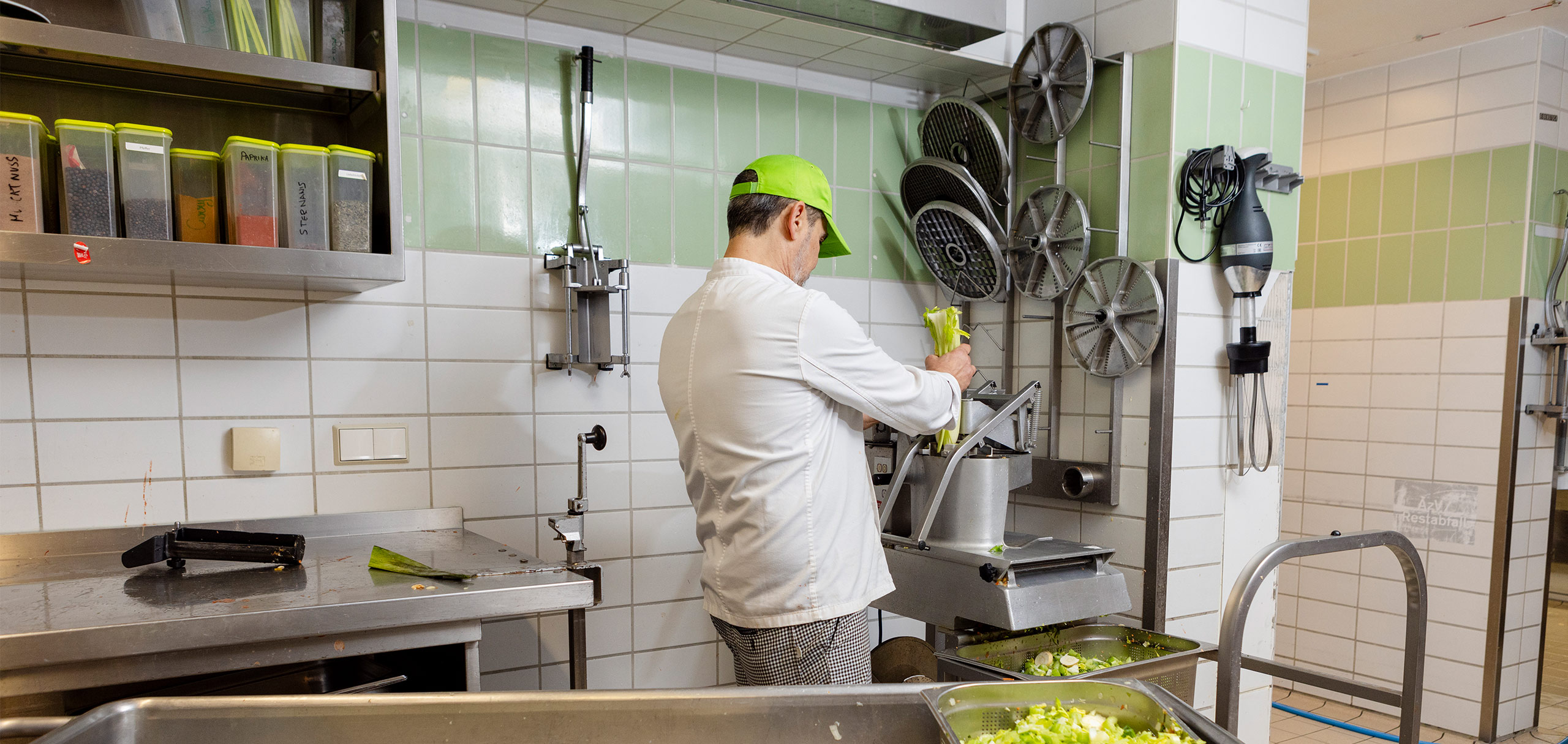
From perfect brunoise to paper-thin cucumber rounds, slicing vegetables well is both an art and a science. While knife skills are essential, no chef can argue with the speed and precision of a high-quality slicer – especially when there’s a full prep list waiting. Whether you're handling delicate produce or bulk root vegetables, the right equipment helps maintain consistency, elevate presentation, and shave hours off your mise en place.
Whether you're running a fast-paced kitchen or scaling up production in a bakery or deli, a commercial vegetable slicer can make all the difference. But with so many models on the market, how do you choose the best vegetable slicer for your needs?
This guide explores the essential features to consider, introduces some of the top-rated slicers for professional kitchens, and shares practical maintenance tips to keep your equipment in peak condition.
Factors to Consider When Selecting a Vegetable Slicer
Not all vegetable slicers are built the same. Some are made for occasional use, while others are designed for intensive, all-day prep. Here’s what to keep in mind when choosing the best food slicer for vegetables in a commercial kitchen:
Blade versatility and precision:
look for models that offer a variety of interchangeable blades or adjustable settings. Switching between fine julienne, thick slices, or uniform cubes helps meet diverse menu needs.
Motor power and speed:
for electric slicers, a powerful motor ensures consistent results without overheating. Speed controls can help fine-tune the slicing for more delicate ingredients.
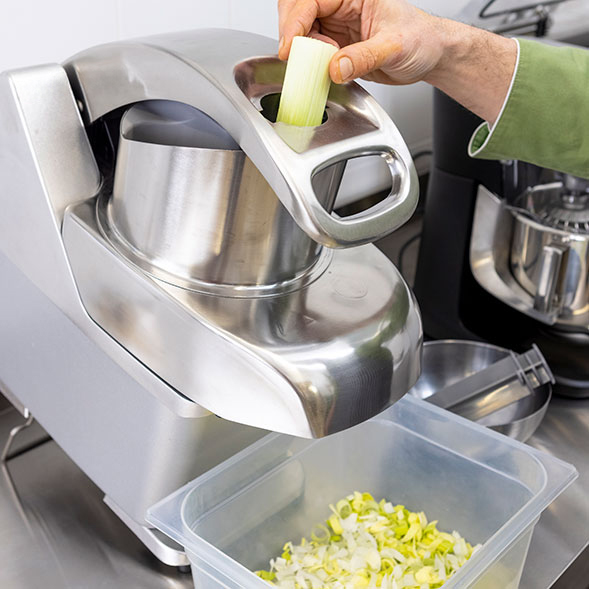
Ergonomic and safe design:
professional slicers should prioritize user comfort and safety. Non-slip bases, secure handles, and built-in guards help reduce strain and prevent accidents.
Build quality and durability:
stainless steel blades, reinforced housings, and robust components are essential for tools that must withstand heavy use every day.
Ease of cleaning:
smooth surfaces, removable parts, and dishwasher-safe components help ensure hygiene and reduce downtime between tasks.
Beyond individual features, consider how the slicer fits into your kitchen’s workflow. For example, a compact model may be ideal for tight spaces, while larger units with continuous feed systems are better suited to high-volume production. If you are limited in space, consider choosing a combined cutter-vegetable slicer.
Top-Rated Commercial Vegetable Slicers for High-Volume Use
When selecting a commercial vegetable slicer, quality and reliability should always come first. Kitchens that rely on consistent output need equipment that performs well under pressure – day after day, shift after shift.
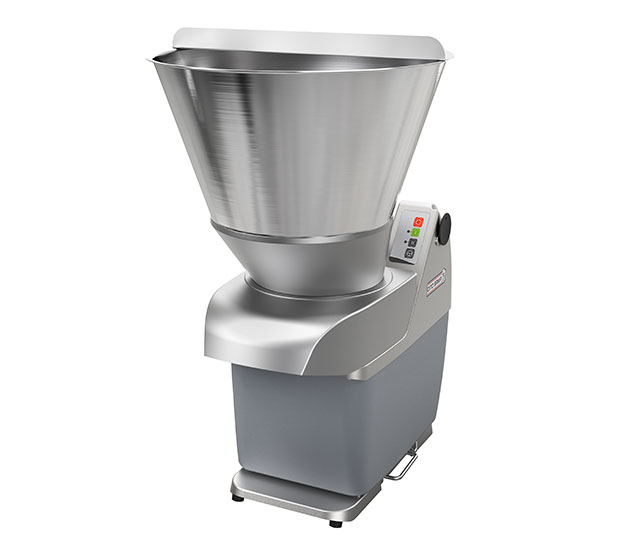
Here’s what to look for in a top-tier commercial vegetable slicer:
– Continuous feed capability: ideal for large batches, these systems reduce downtime and increase efficiency by allowing uninterrupted slicing.
– Heavy-duty construction: metal frames, reinforced slicing chambers, and industrial-grade motors all contribute to performance and longevity.
– Precision engineering: units that offer fine control over slice thickness and cut type help improve presentation and reduce waste.
Dito Sama’s vegetable slicers are designed with this in mind. Their commercial models are equipped with powerful motors, ergonomic designs, and interchangeable discs to handle a wide range of slicing tasks – from paper-thin cucumbers to firm root vegetables. The focus is always on precision, speed and product durability, helping chefs and prep teams deliver consistently high-quality results with minimal effort.
When comparing different options, think about how often the slicer will be used, who will operate it, and which tasks it will need to perform most frequently. Investing in a professional slicer tailored to your production level pays off in saved time, better consistency, and a smoother kitchen workflow.
How to Maintain and Clean Your Vegetable Slicer Properly
Even the best vegetable slicer won’t perform well if it’s not properly cared for. Routine maintenance and cleaning are essential to ensure both longevity and food safety.
Start with daily cleaning routines:
- Disassemble the slicer after each use: this prevents food buildup and makes it easier to clean all components thoroughly.
- Wash blades and attachments with warm, soapy water – or in the dishwasher if they’re rated for it, as all Dito Sama’s slicers are. Avoid harsh abrasives that could dull the blades or damage coatings.
- Wipe down the body of the slicer with a damp cloth and sanitizing solution. Pay attention to joints and crevices where residue can accumulate.
On monthly basis (depending on usage):
- Inspect blades for wear or dullness, and sharpen or replace them as needed.
- Check moving parts and motor function, tightening any loose screws and lubricating as recommended by the manufacturer.
Dito Sama slicers are built with maintenance in mind. Their components are designed for easy access, and many parts are dishwasher-safe, helping your team clean quickly and get back to prep work without delay.
With proper care, a professional-grade vegetable slicer will deliver reliable performance for years, reduce downtime, and ensure every dish leaves the kitchen looking – and tasting – its best.
LAST NEWS
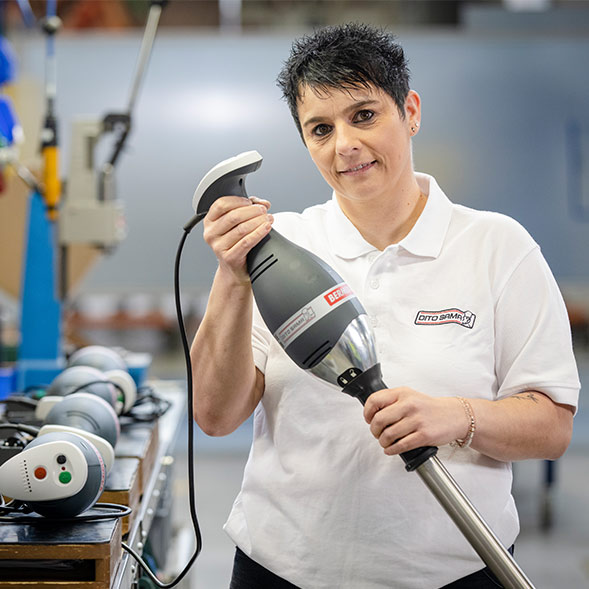
How to Select the Best Hand Mixer for a Professional Kitchen
- Dito Sama
- ...
- NEWS & EVENTS
- How to Select the Best Hand Mixer for a Professional Kitchen
Share
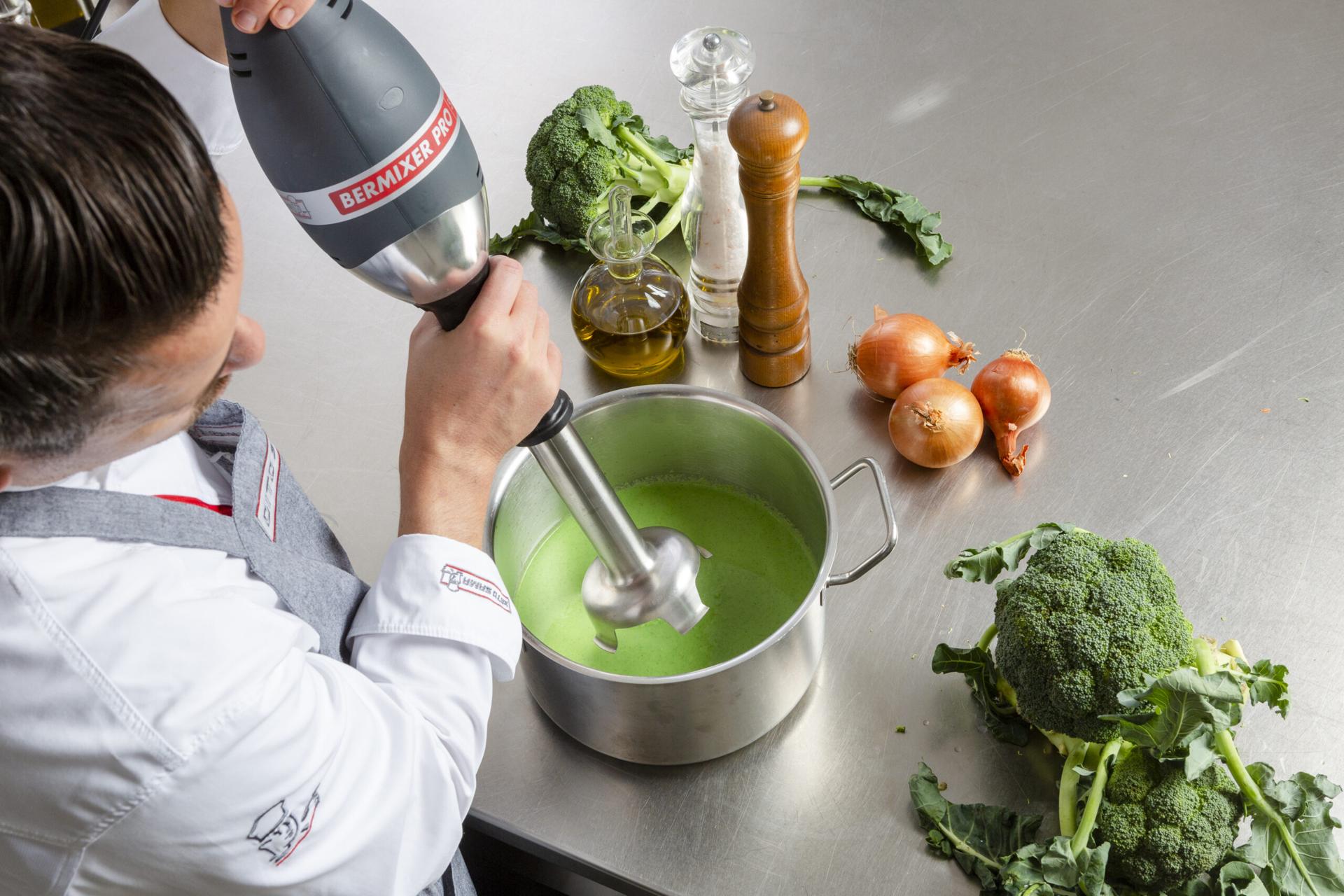
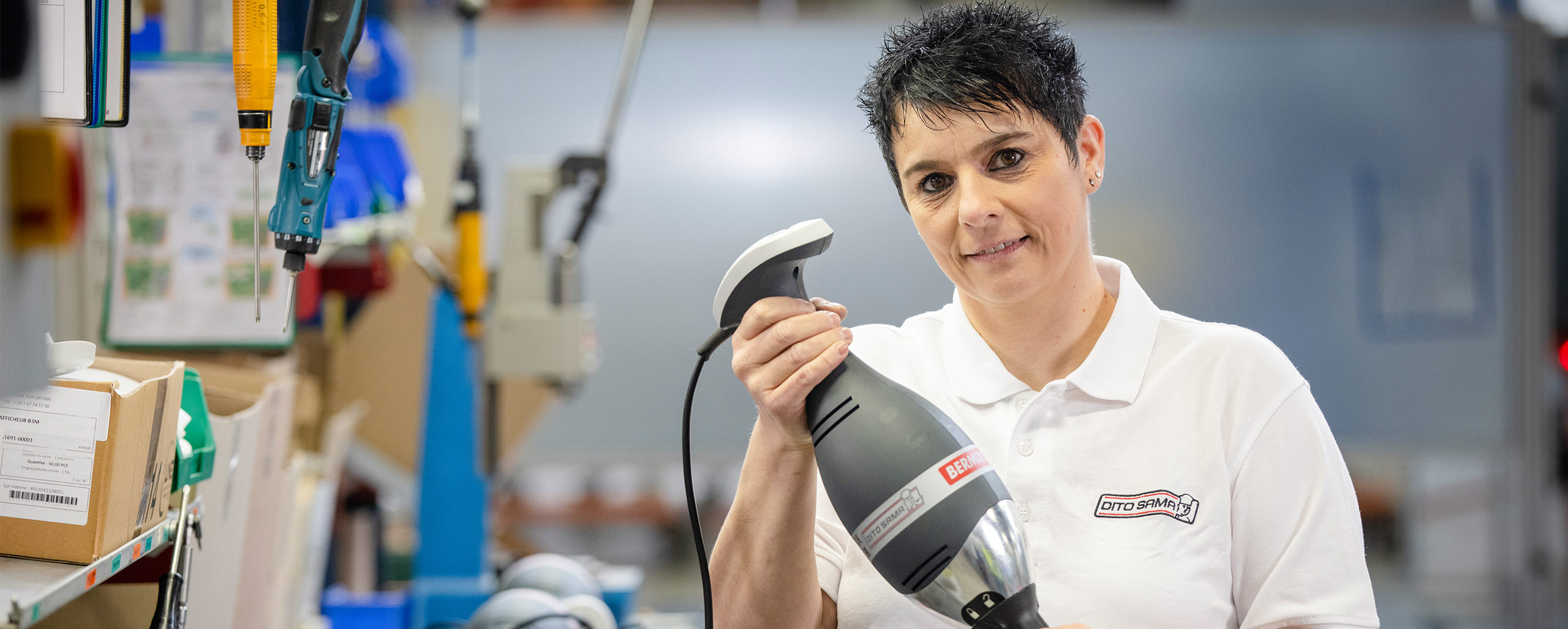
A professional hand mixer might seem like a modest tool, but in a busy kitchen, it's often a powerhouse of precision and versatility. Whether you're whipping cream, folding batters, or emulsifying sauces, having the right model in your hands can make a tangible difference in both speed and quality.
In this guide, we'll explore what to look for when selecting the best hand mixer for baking and beyond, compare top-performing models, and share practical maintenance tips to keep your mixer running smoothly.
Key Features to Look for in a High-Performance Hand Mixer
Choosing a professional hand mixer is about more than just speed – it’s about ensuring peak performance during extended use and across a variety of culinary applications. In a professional setting, reliability and adaptability are non-negotiable. Here’s a deeper look at the most important features to prioritize:
look for mixers with motors starting at 200 watts or higher for commercial use. High torque is essential for maintaining power through heavy doughs, dense batters, or prolonged whipping without stalling or overheating.
more than just multiple speeds, the best mixers offer precision speed control – allowing gradual increases to prevent splatter and giving chefs full control over texture and consistency.
a professional hand mixer should feel stable and natural in hand. A non-slip, contoured grip, and well-balanced weight distribution make a huge difference when the tool is used for long periods.
look for die-cast metal housings, reinforced internal gears, and stainless steel attachments. These components not only ensure longevity but also allow the mixer to withstand continuous, high-volume tasks without breakdowns.
commercial kitchens require fast turnaround times between tasks. A good mixer should have detachable, dishwasher-safe parts, minimal crevices for food build-up, and an exterior that wipes down easily for consistent hygiene.
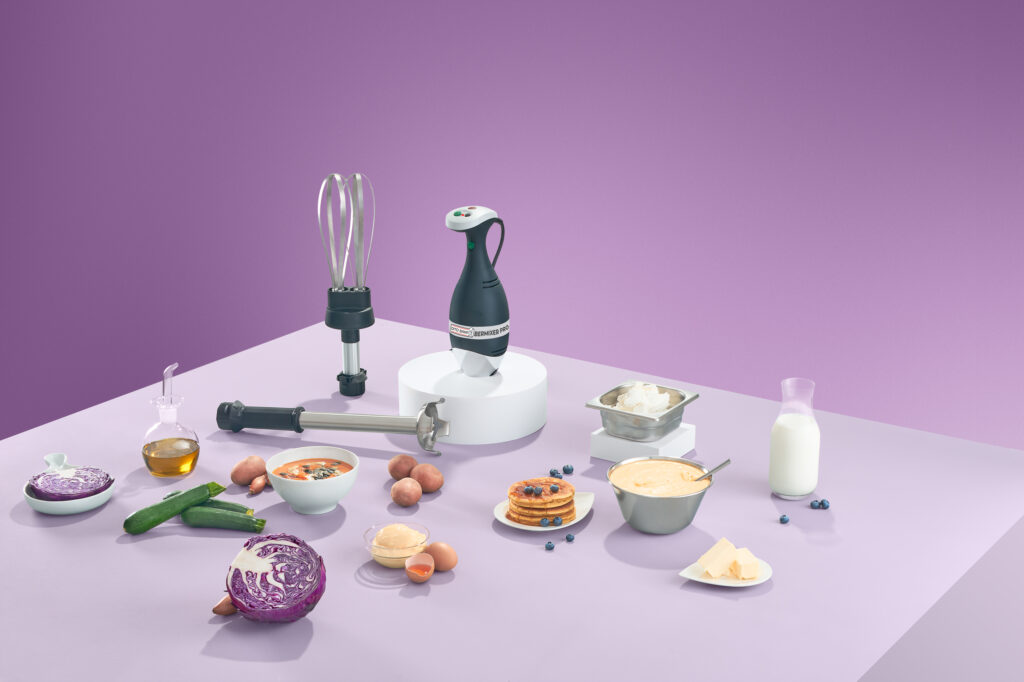
depending on your kitchen’s needs, choosing a mixer with the right accessory options can greatly increase its versatility. Look for:
-
- whisks and beaters for emulsifying, whipping, and folding;
- multiple tube lengths for different mixing depths and container sizes
- a hands-free holder or stand for stability during prolonged mixing
- optional wall brackets or storage solutions for compact kitchens
These additional tools ensure the mixer adapts to a wide variety of professional tasks, saving time and increasing precision.
Professional models are also expected to offer a long service life. That’s why investing in a hand mixer that’s specifically designed for commercial kitchens is worth every penny.
Top Hand Mixers for Professional Kitchens: A Comparison
While there are many hand mixers on the market, only a few are truly suitable for professional environments. Models designed for domestic use often fall short in terms of power, endurance, and build quality.
Look for mixers with features such as continuous run capacity, metal gear systems, and variable speed control with overload protection. These allow the mixer to perform reliably even under intense daily use.
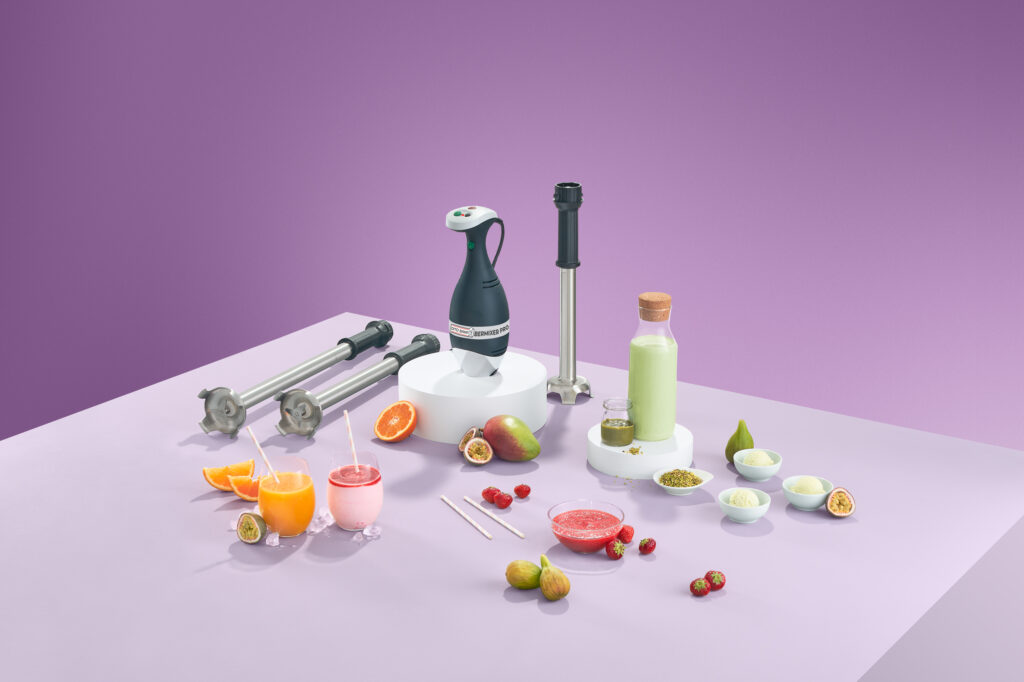
Hand mixers from Dito Sama are engineered with commercial demands in mind. Built for precision, balance, and power, they’re ideal for bakeries, pastry kitchens, and restaurants that need reliable tools day in and day out. Their intuitive design ensures comfort and safety while maintaining consistency in every batch.
Before committing to a purchase, consider the scale and frequency of your mixing tasks. A lightweight but powerful mixer may be perfect for fast-paced prep stations, while a more robust unit is better suited to high-volume production.
Hand Mixer Maintenance Tips for Long-Lasting Performance
Even the best quality hand mixers need regular maintenance to stay at peak performance. Following a few best practices can extend the life of your appliance and prevent downtime.
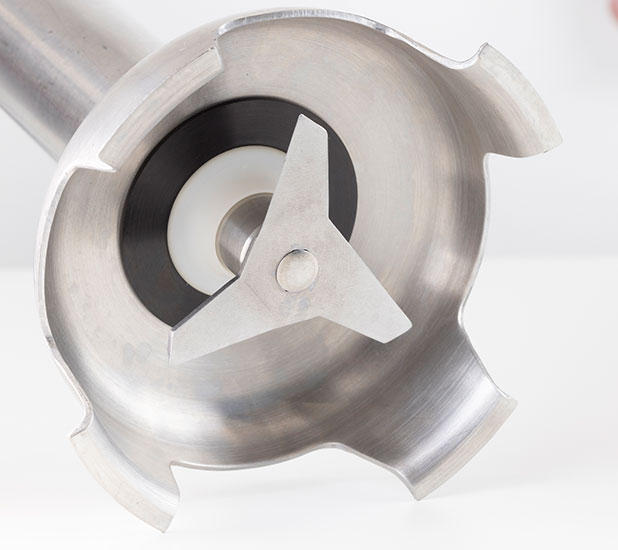
Clean after every use:
wipe down the body and wash attachments immediately after mixing. Residue left behind can harden and strain the motor over time.
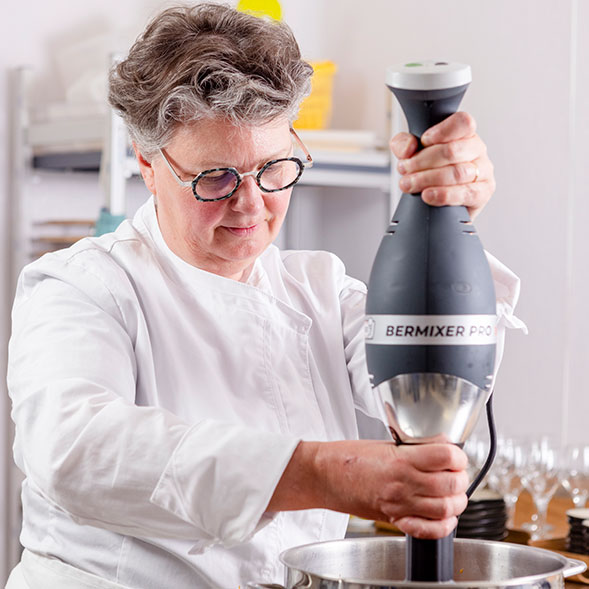
Check attachments regularly:
inspect beaters and whisks for signs of bending or wear. Damaged tools can affect performance and increase motor strain.
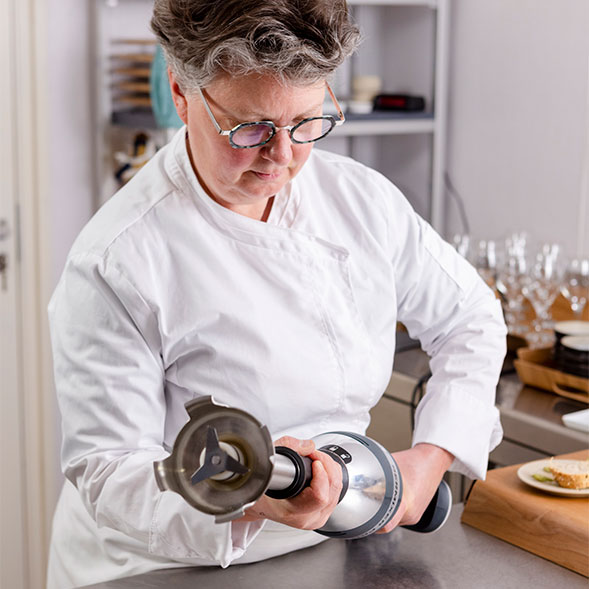
Store properly:
keep the mixer in a dry, dust-free area and avoid wrapping cords tightly around the base, which can cause internal damage.

Follow manufacturer guidelines:
adhering to recommended run times and cleaning instructions helps preserve the motor and housing.
Dito Sama’s professional hand mixers are designed for longevity, with reinforced housings, easily replaceable parts, and support that makes upkeep easy and efficient. By incorporating simple habits into your kitchen routine, you ensure your mixer remains a reliable part of your workflow.
LAST NEWS


